
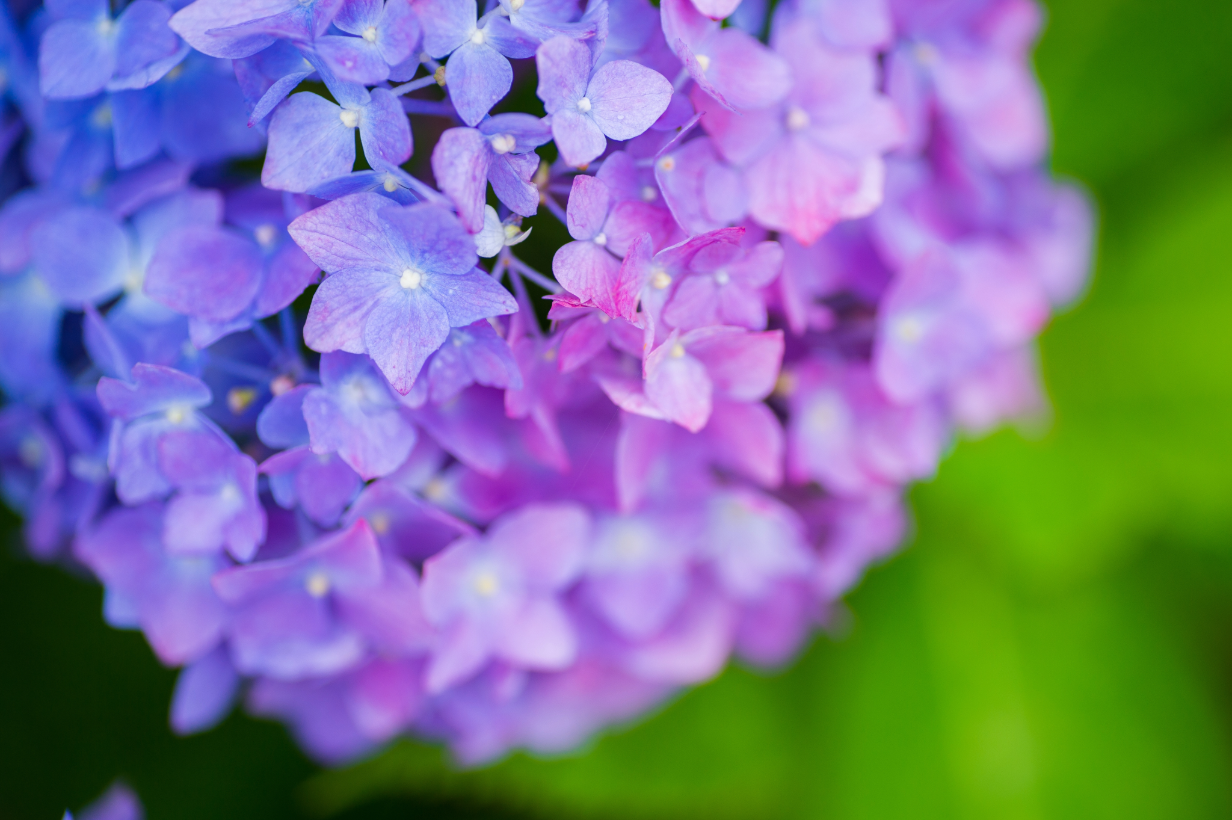
Hydrangeas and Japanese irises reach their peak from the rainy season into early summer. In Tokyo, there are many places to enjoy beautiful blossoms—from famous spots with excellent access near stations, to hidden gems perfect for a leisurely stroll, and historic Japanese gardens.
In this article, we introduce 12 carefully selected hydrangea and Japanese iris spots in Tokyo, along with the latest 2026 peak seasons and event information for hydrangea and iris festivals. Even on rainy days, why not head out to discover vivid, atmospheric views?
※ Bloom periods may vary depending on the weather. Please check the latest flowering status on official websites or official social media before visiting.
Tokyo’s Best Hydrangea Spots and Recommendations
Hakusan Shrine and Hakusan Park
Bunkyo City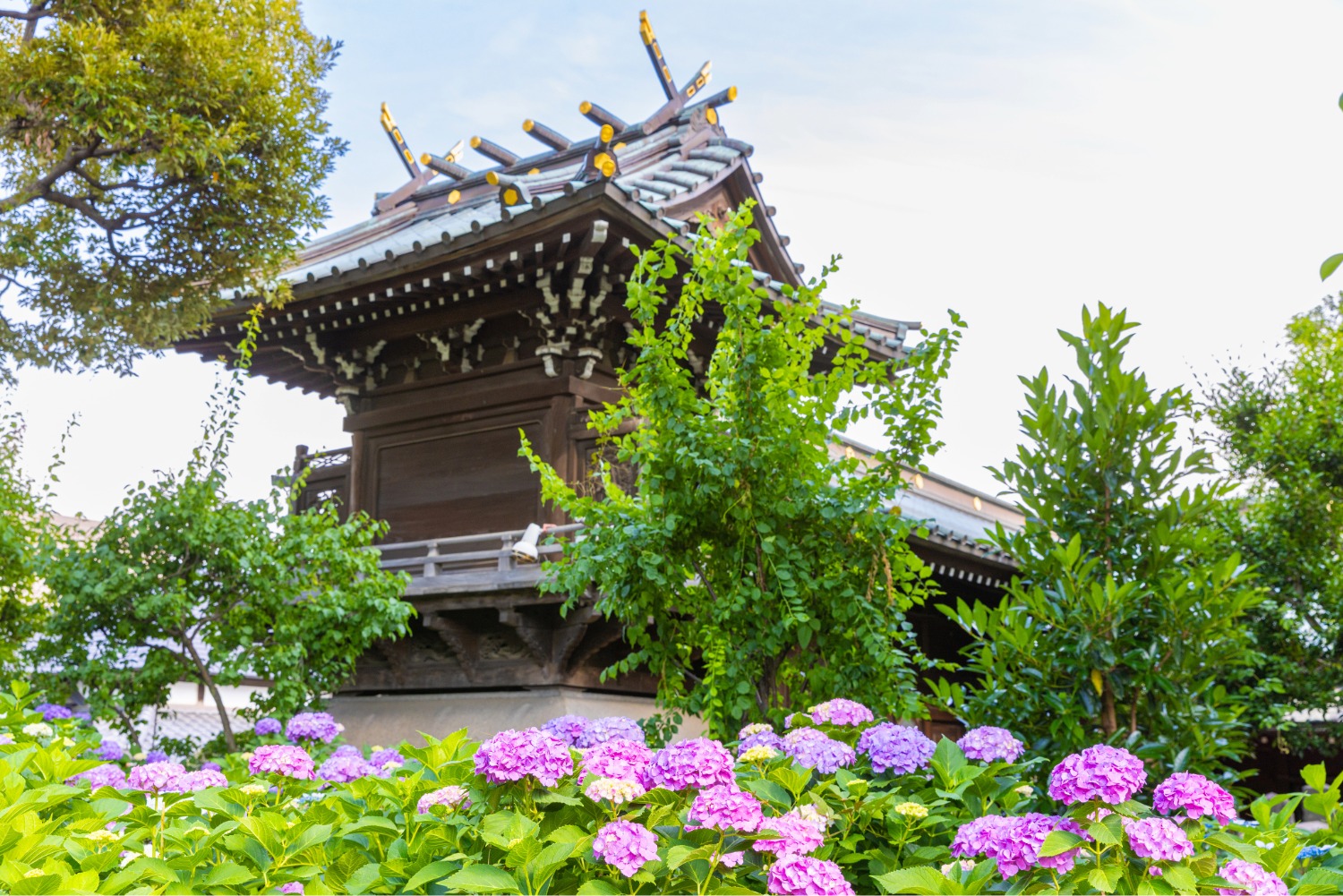
Adjacent Hakusan Shrine and Hakusan Park in Bunkyo City are a popular spot where about 3,000 hydrangeas bloom in profusion despite being in the city center. At peak viewing, from early to mid-June each year, the “Bunkyo Hydrangea Festival” is held, and the 富士塚 is specially opened to the public only during the festival period. Just about a 2-minute walk from Hakusan Station, it’s easy to visit and perfect to combine with a stroll around the area.
| Address | Around 5-31-26 Hakusan, Bunkyo City, Tokyo |
|---|---|
| Access |
Toei Mita Line “Hakusan Station,” Exit A3: about 2 minutes on foot Tokyo Metro Namboku Line “Hon-komagome Station,” Exit 1: about 6 minutes on foot |
| Flowers and scale | About 3,000 hydrangea bushes |
| Best season / Events |
Early to mid-June each year “Bunkyo Hydrangea Festival” scheduled for Saturday, June 6 to Sunday, June 14, 2026 |
| Admission |
Free Note: During the festival period, the special opening of the 富士塚 is from 10:00 to 16:00 |
| Opening hours | As it is an outdoor shrine precinct and park, viewing is basically free at any time |
Fuchu City Kyodo-no-Mori Museum
Fuchu City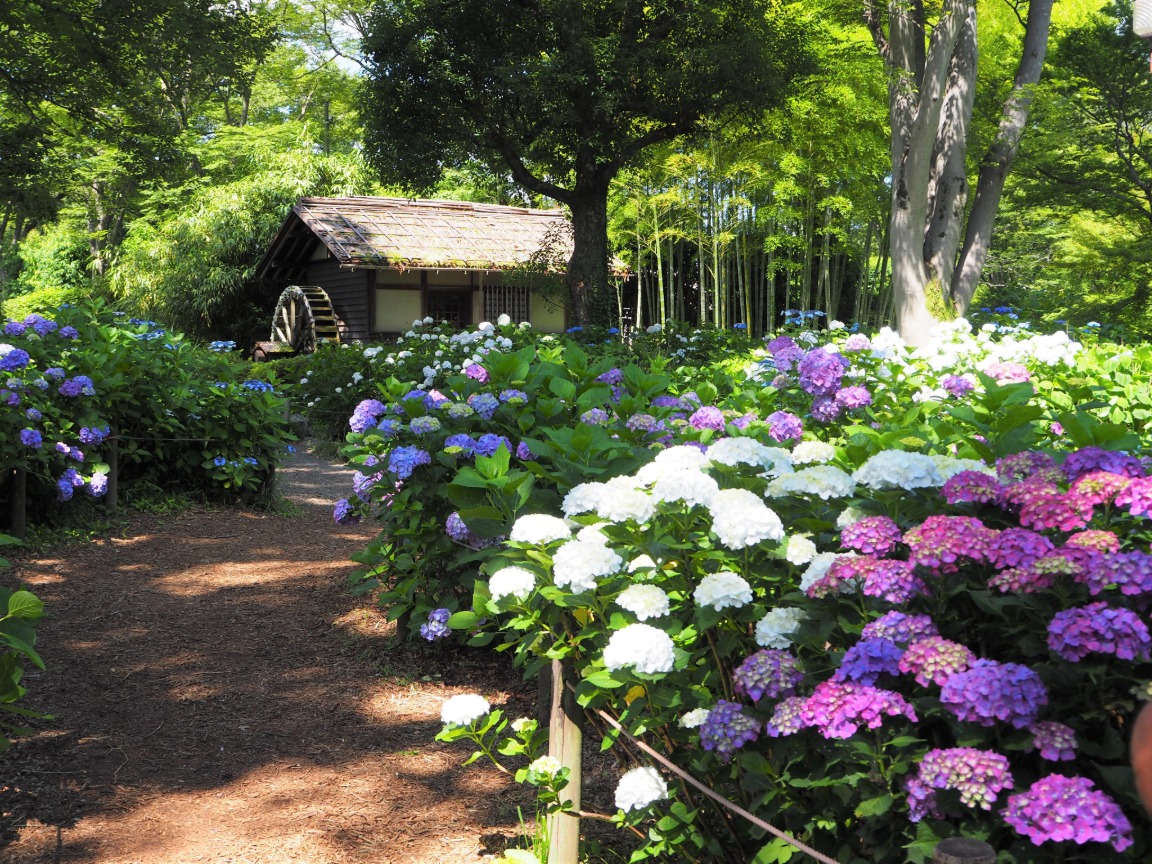
A Fuchu City landmark where restored historic buildings across the spacious grounds and around 10,000 hydrangea plants create a nostalgic landscape. During the “Kyodo-no-Mori Hydrangea Festival,” there are plenty of events, including exhibitions of potted hydrangeas of various varieties and special tea service in the tea room. The combination of retro streetscapes and vibrant hydrangeas is perfect for photography.
| Address | 東京都府中市南町6-32 |
|---|---|
| Access |
Take a bus from JR Nambu Line/Keio Line “Bubaigawara Station,” etc. About 20 minutes on foot from JR Fuchu-Hommachi Station, Bubaigawara Station, or Koremasa Station |
| Types and scale of flowers | Approximately 10,000 hydrangea bushes |
| Best season/events | “Kyodo no Mori Hydrangea Festival” held from Saturday, May 30, 2026 to Sunday, July 5, 2026 |
| Admission fee |
Adults 300 yen; junior high school students and younger 150 yen ※ Junior high school students and younger who live or attend school in Fuchu City are free |
| Opening hours |
9:00–17:00 (last entry 16:00) ※ Closed on Mondays (or the following weekday if Monday is a national holiday) |
Takahata Fudoson Kongo-ji
Hino City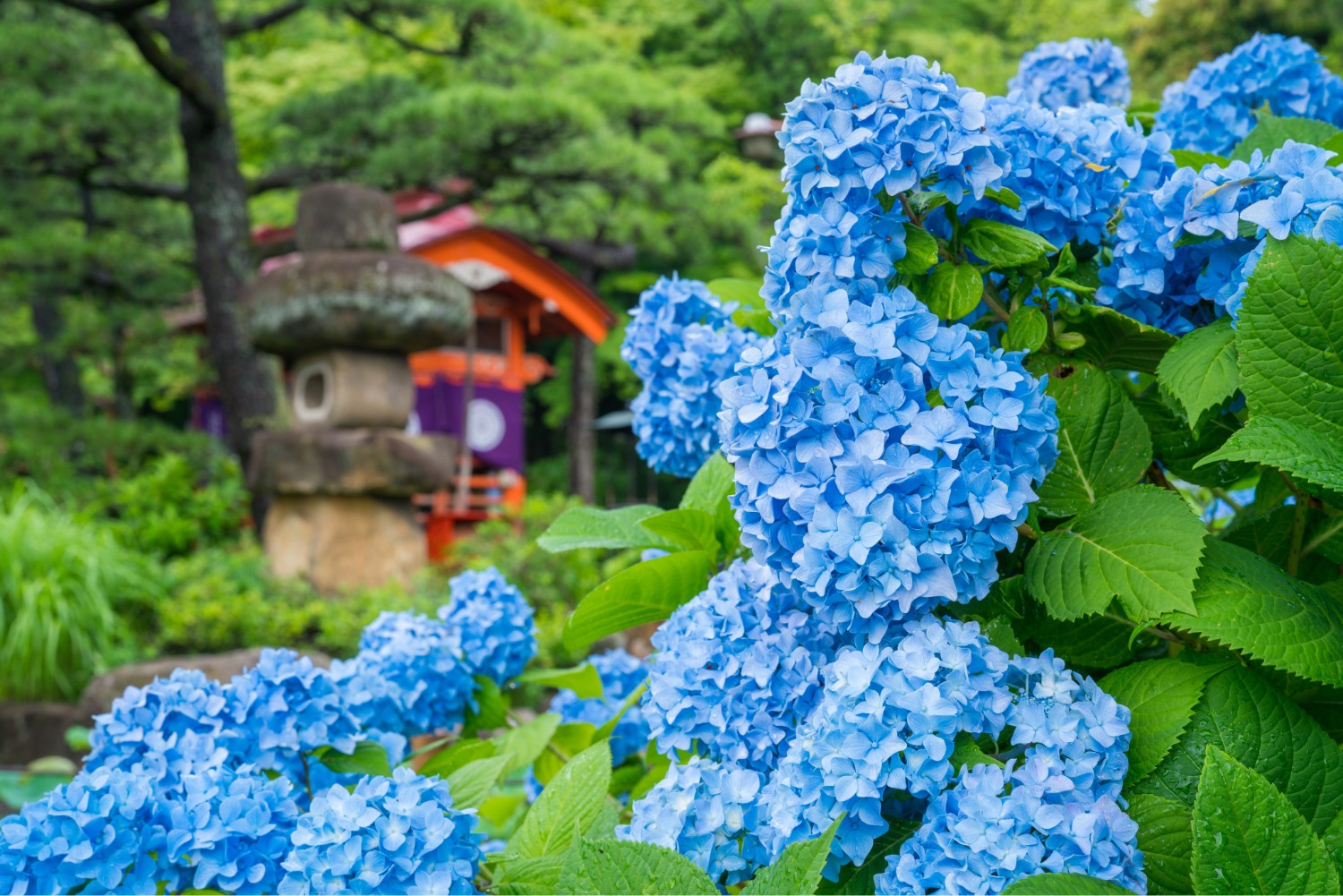
One of the Kanto region’s three great Fudo temples, Takahata Fudoson in Hino City is known in Tokyo as the “Hydrangea Temple.” From the precincts up the hillside, more than 7,800 bushes across about 250 varieties of mountain and Western hydrangeas bloom in profusion, making it one of the capital’s premier spots. The combination of temple architecture such as the five-story pagoda with hydrangeas is exceptionally beautiful and truly impressive. The Hydrangea Festival in June draws large crowds.
| Address | 東京都日野市高幡733 |
|---|---|
| Access | About 5 minutes on foot from Keio Line/Tama Toshi Monorail “Takahatafudo Station” |
| Types and scale of flowers | Around 250 varieties and over 7,800 bushes (mountain hydrangeas, Western hydrangeas, lacecap hydrangeas, etc.) |
| Best season/events |
Mountain hydrangeas: late May to mid-June; Western hydrangeas: mid- to late June “Hydrangea Festival” held June 1 (Mon)–June 30 (Tue), 2026 |
| Admission |
Strolling the grounds is free Okuden admission 500 yen; Dainichidō admission 300 yen |
| Opening hours |
The precincts are open for daytime visits Viewing of the Okuden and Dainichidō is roughly 9:00–16:00 |
Asukayama Park · Asuka no Komichi
Kita City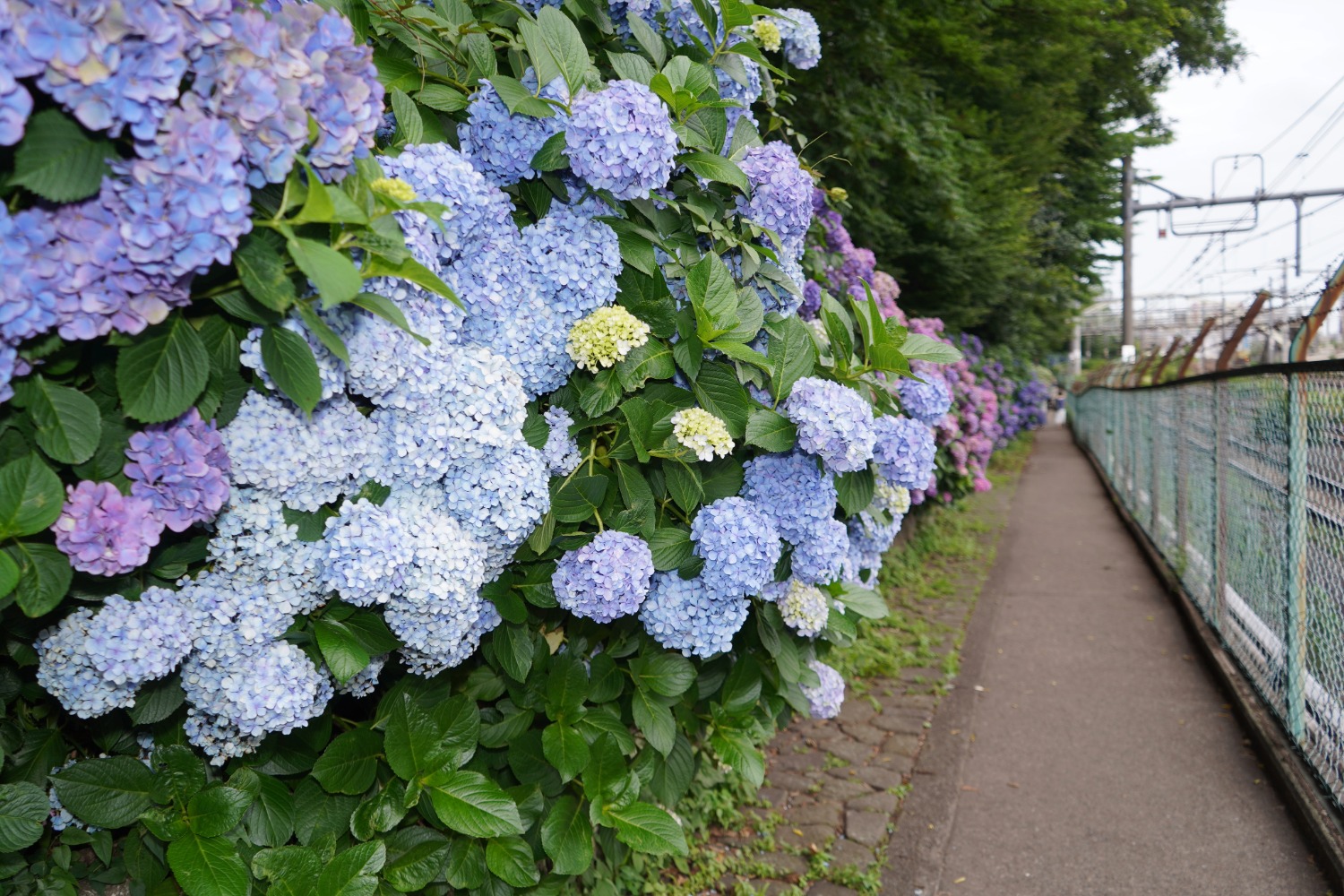
“Asuka no Komichi,” a path along the railway right by JR Oji Station, is a popular walkway where about 1,300 hydrangea bushes bloom over roughly 350 m. It is also known as a perfect photo spot where you can capture hydrangeas together with passing trains and the Toden Arakawa Line (Tokyo Sakura Tram). It’s close to the station for easy access and is a famous spot to enjoy along with a stroll in Asukayama Park.
| Address | Around 1-1-3 Oji, Kita City, Tokyo |
|---|---|
| Access |
JR Keihin-Tohoku Line “Oji Station” Central/South Exits: a short walk Tokyo Metro Namboku Line “Oji Station” Exit 1: about 3 minutes on foot Tokyo Sakura Tram “Asukayama” / “Oji-ekimae”: a short walk |
| Flower types/scale | About 10 varieties; about 1,300 bushes (Asuka no Komichi / park’s north slope) |
| Best time to see | Early to mid-June in a typical year (sometimes until early July) |
| Admission | Free |
| Hours | The park and path are generally open for free viewing |
Tamagawadai Park
Ota City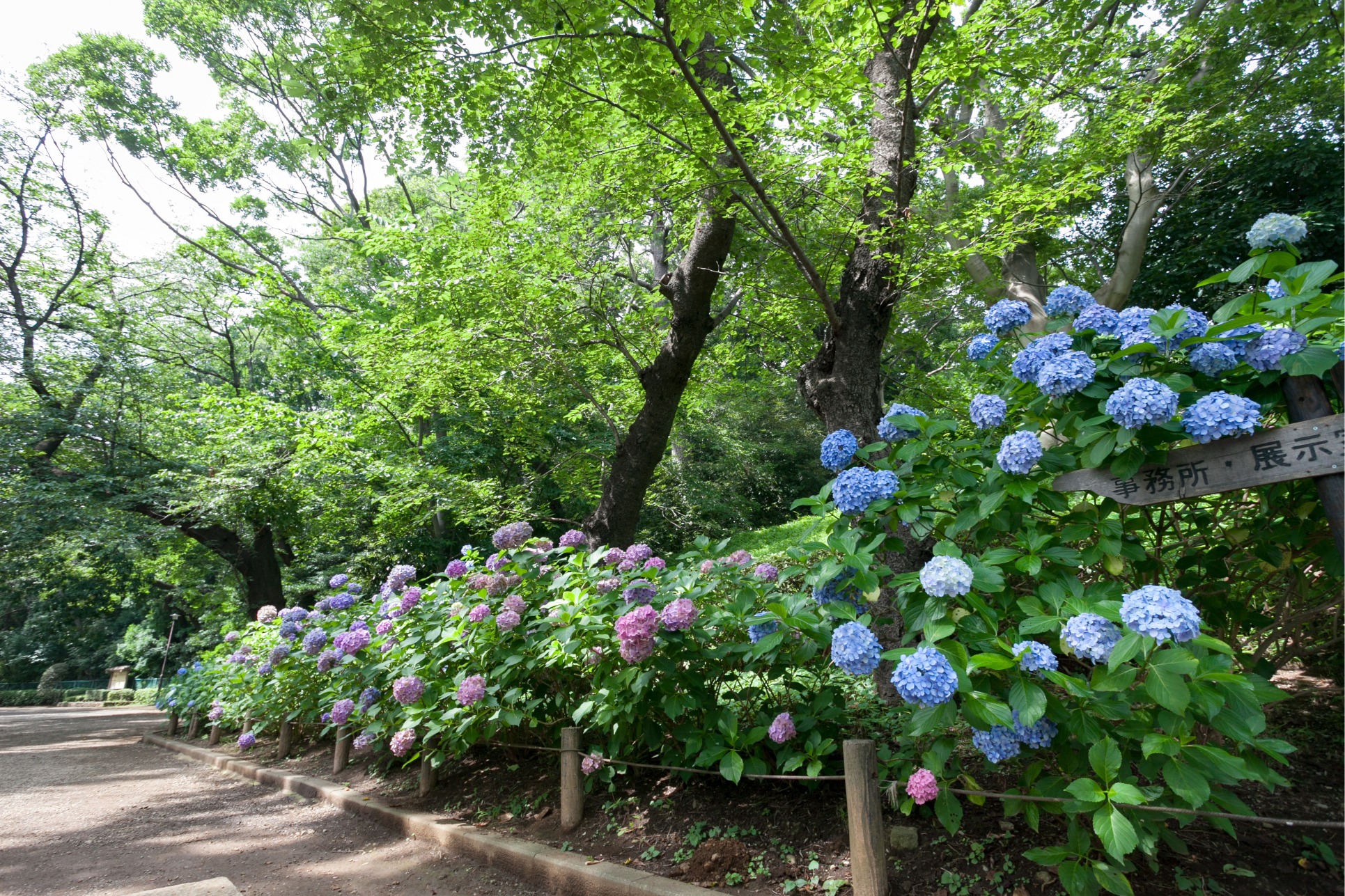
Located on the hills along the Tama River, Tamagawadai Park features a splendid Hydrangea Garden with about 7 varieties and 3,000 plants in bloom. There are many highlights such as ancient burial mounds and a lookout deck, allowing you to enjoy a leisurely stroll in a rich natural setting. Compared with other hydrangea spots in Tokyo, it is relatively easy to avoid crowds here, making it a recommended hidden gem.
| Address | 1-63-1 Den-en-chofu, Ota City, Tokyo |
|---|---|
| Access | About 1 minute on foot from the West Exit of Tamagawa Station (Tokyu Tamagawa Line) |
| Flower varieties and scale | Approx. 7 varieties and about 3,000 hydrangea plants |
| Best viewing time | Early to mid-June each year |
| Admission | Free |
| Opening hours | The park is generally open for free use (some areas are closed at night) |
Japanese iris spots in Tokyo – recommended places
Horikiri Iris Garden
Katsushika City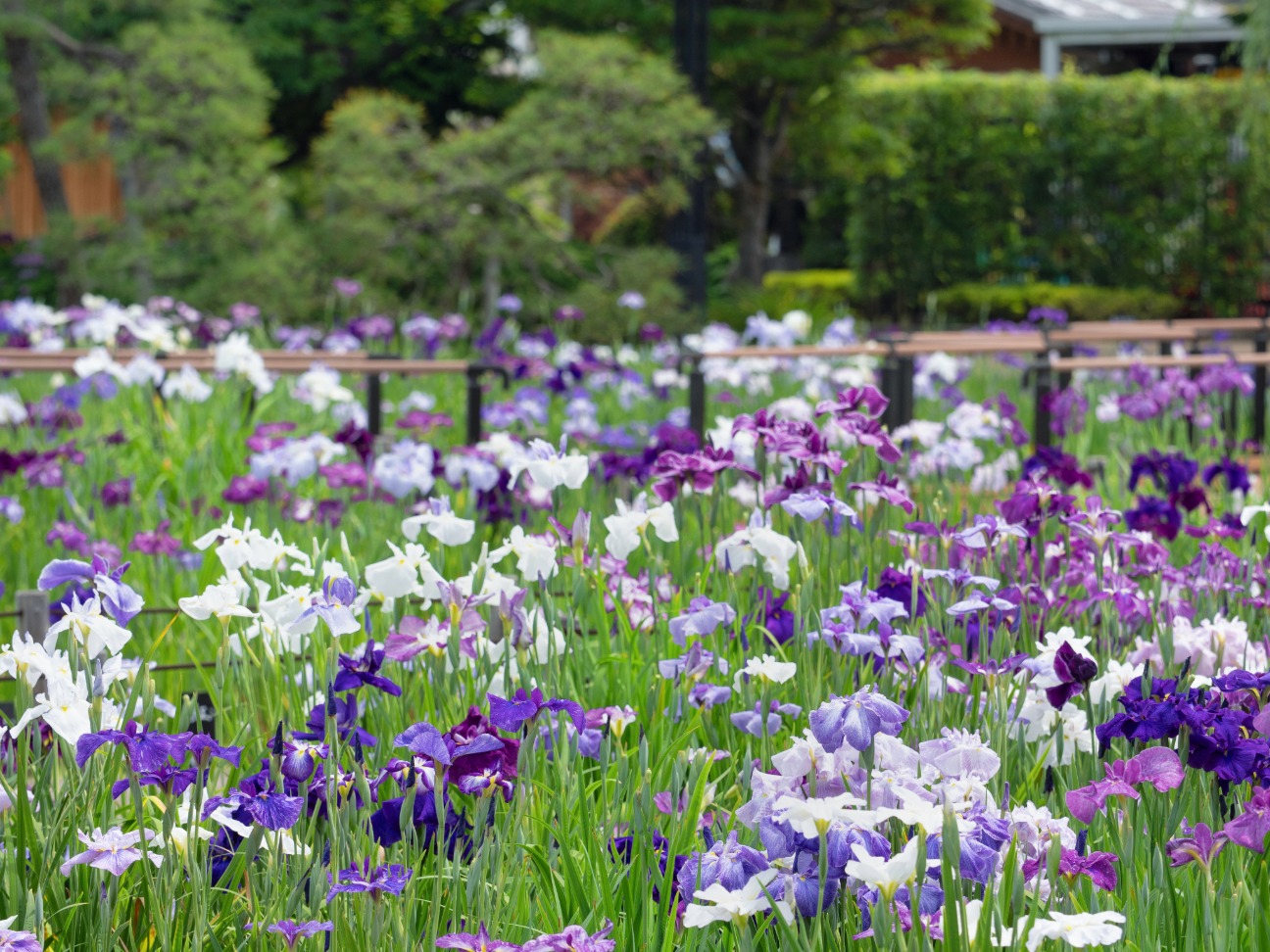
A historic garden known since the Edo period for Japanese irises, also depicted in ukiyo-e by Utagawa Hiroshige. Around 200 varieties and 6,000 clumps of Edo irises bloom in profusion, offering beautiful scenery full of old-town charm. During the “Katsushika Shobu Festival” in June, the peak viewing season, opening hours are extended, making this one of Tokyo’s leading iris spots visited by many tourists.
| Address | 東京都葛飾区堀切2-19-1 |
|---|---|
| Access | About a 10-minute walk from Keisei Main Line 「堀切菖蒲園駅」 |
| Flower types/scale | About 200 varieties and 6,000 clumps of irises |
| Best time & events |
“Katsushika Shobu Festival” held May 25 (Mon)–June 14 (Sun), 2026 ※ During the festival period, a free shuttle bus operates (weekends only) |
| Admission | Free |
| Opening hours |
Usually 9:00〜17:00 ※ May 25–June 14, 2026: extended to 8:00〜18:00 |
Tokyo Metropolitan Mizumoto Park
Katsushika Ward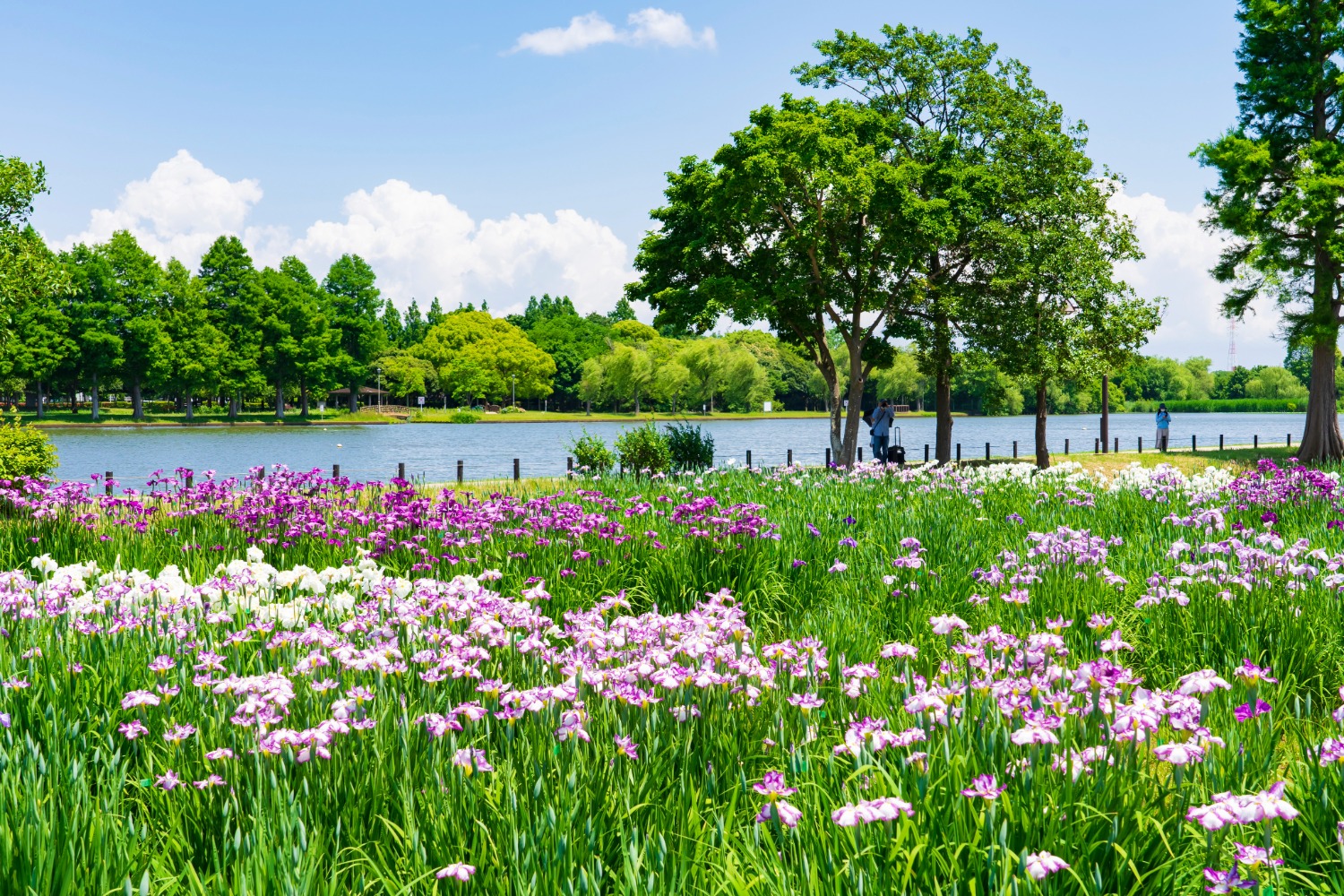
The largest waterside park in Tokyo, featuring a vast iris garden where about 100 varieties and 14,000 clumps of Japanese irises are in full bloom. Together with Horikiri Shobuen, it serves as a venue for the “Katsushika Shobu Festival,” and its biggest attraction is that you can enjoy irises and hydrangeas at the same time amid open waterside scenery. An ideal spot for early-summer strolls and picnics.
| Address | 東京都葛飾区水元公園ほか |
|---|---|
| Access | From JR Joban Line or Tokyo Metro Chiyoda Line 「金町駅」, or Keisei Kanamachi Line 「京成金町駅」, take a Keisei Bus to 「水元公園」 and walk about 7 minutes |
| Flower types/scale | About 100 varieties and 14,000 clumps of irises |
| Best time & events |
「葛飾菖蒲まつり」 Held May 25 (Mon)〜June 14 (Sun), 2026 Note: Free shuttle bus operates during the festival (weekends only) |
| Admission | Free |
| Opening hours | Open at all times (facility hours such as the service center are separate) |
Koiwa Iris Garden
Edogawa City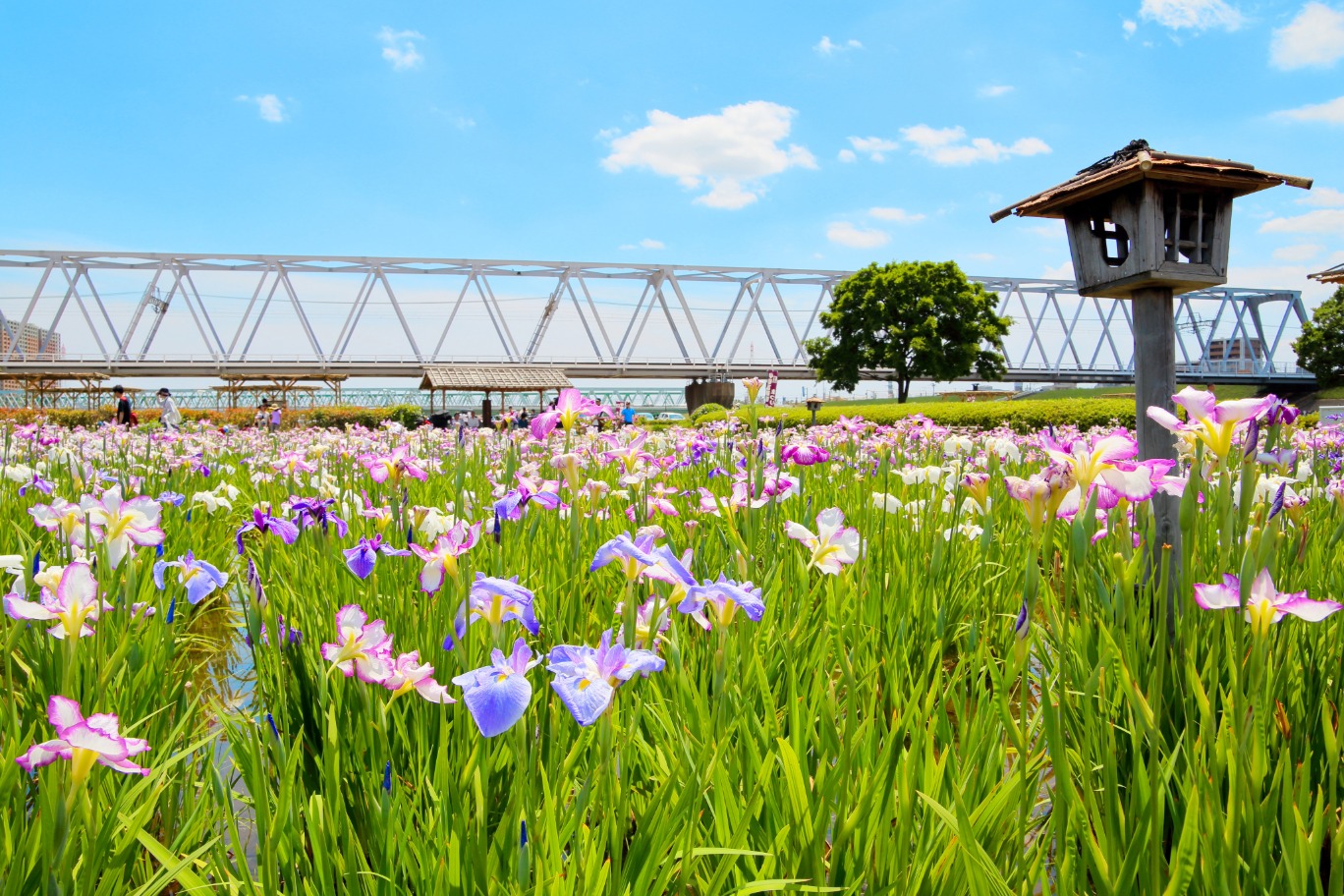
At Koiwa Iris Garden, which spreads across the Edogawa riverbed, about 100 varieties and 50,000 Japanese irises bloom in profusion. The expansive sky unique to the riverbank and the vivid contrast of the irises are beautiful, making for a liberating stroll. During the peak season, the 「小岩菖蒲園まつり」 is held, and this famous spot in Edogawa City bustles with many visitors.
| Address | Edogawa Riverbed, Kita-Koiwa 4-chome, Edogawa City, Tokyo |
|---|---|
| Access | About 5 minutes on foot from Keisei Main Line "Edogawa Station" |
| Flower types/Scale | About 100 varieties・about 50,000 Japanese irises |
| Best time & events |
Typically late May to mid-June 「小岩菖蒲園まつり」 Held May 30 (Sat)〜June 14 (Sun), 2026 |
| Admission | Free |
| Opening hours | Open at all times (parking gate has time restrictions) |
しょうぶ沼公園
Adachi City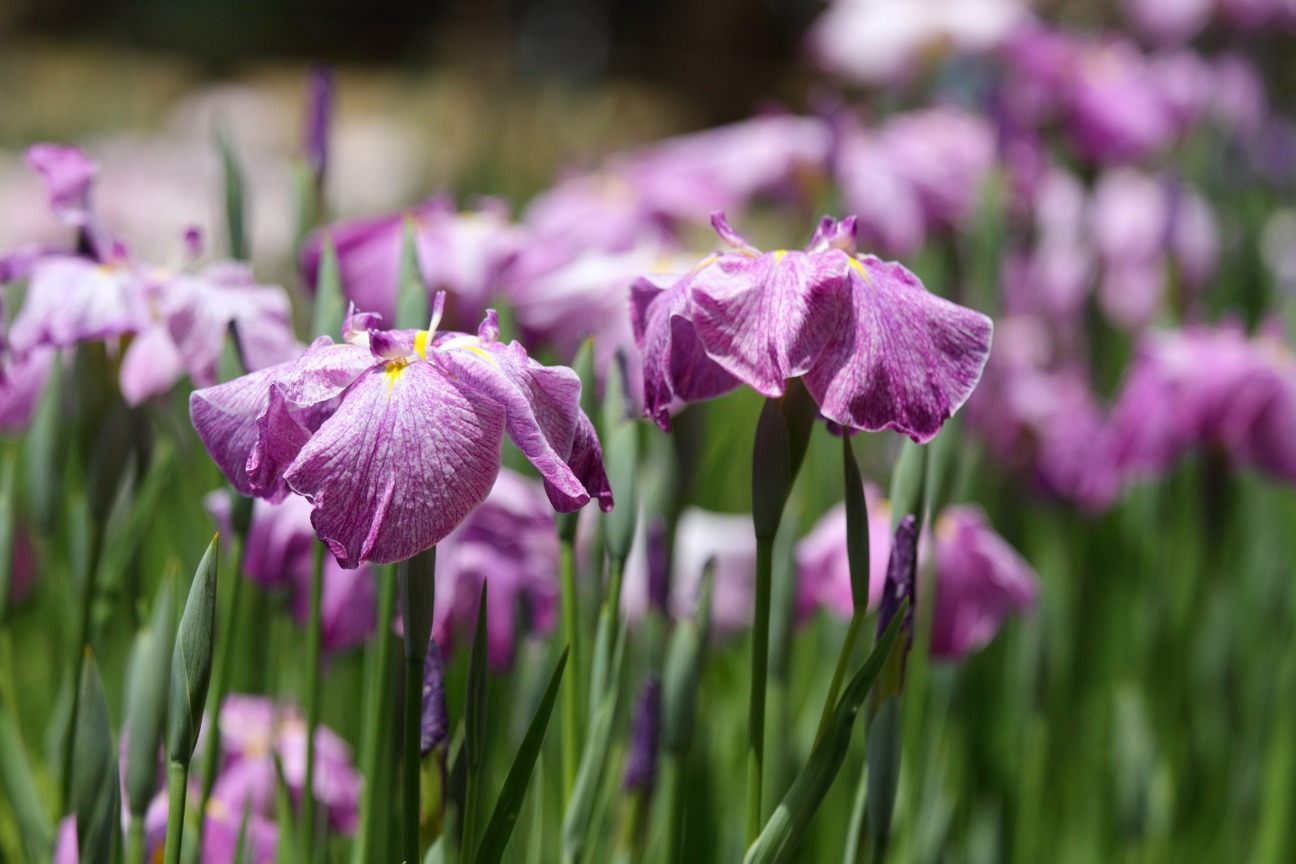
This park in Adachi boasts unbeatable access—it's right in front of Kita-Ayase Station. About 140 varieties and 8,100 clumps of Japanese irises are planted, and you can admire the flowers up close from the wooden boardwalks in the park. Being so close to the station, it's easy to drop by and is a particularly recommended hidden gem among Tokyo's iris spots.
| Address | 東京都足立区谷中2-4-1 |
|---|---|
| Access | About 1 minute on foot from Tokyo Metro Chiyoda Line “Kita-Ayase Station” |
| Flower varieties/scale | Approx. 140 varieties and about 8,100 clumps of Japanese irises |
| Best viewing / Events |
Early June each year 「しょうぶまつり」 scheduled for Sat, June 6 and Sun, June 7, 2026 |
| Admission | Free |
| Hours | Open at all times |
明治神宮御苑
Shibuya City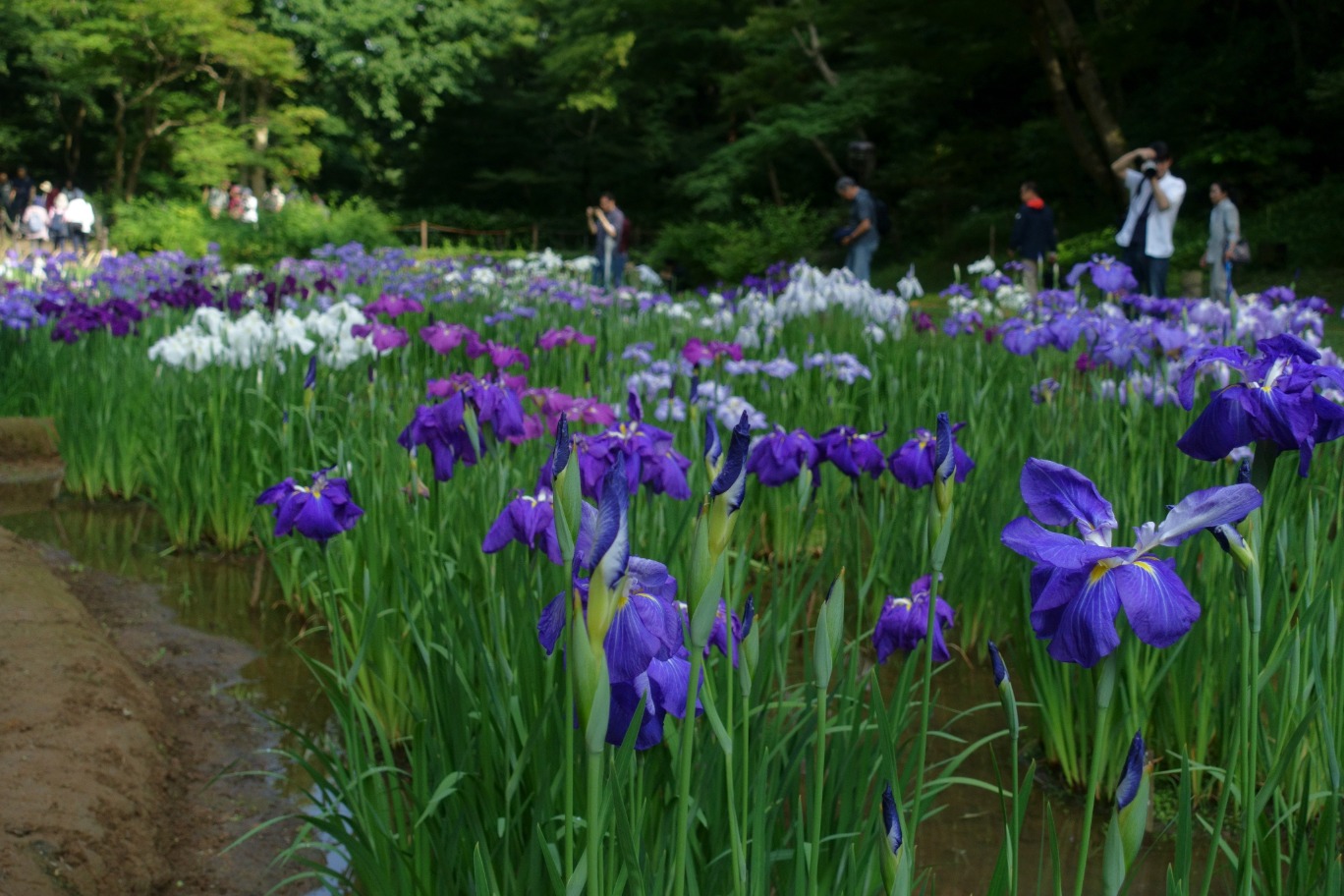
Home to a historic iris garden said to have been planted by Emperor Meiji for Empress Shōken, where around 150 varieties and 1,500 clumps of Japanese irises bloom in profusion. The iris garden, nourished by the pure spring water of 清正井(きよまさのいど), is filled with tranquility and refinement that make you forget the city's bustle. It also has convenient access from Harajuku Station and is a precious spot to experience nature in the heart of the city.
| Address | 東京都渋谷区代々木神園町1-1 |
|---|---|
| Access | From JR "Harajuku Station" or Tokyo Metro "Meiji-jingumae Station," head toward the Meiji Jingu South Approach Gate |
| Flower types/scale | About 150 varieties and 1,500 clumps of Japanese irises |
| Best viewing period | Early to mid-June each year |
| Admission fee | Gyoen maintenance cooperation fee: 500 yen (free for junior high school students and younger) |
| Opening hours |
In June: weekdays 8:00–17:00, Sat/Sun 8:00–18:00 ※ Hours vary by month. Please check the official website before visiting |
Koishikawa Korakuen
Bunkyo City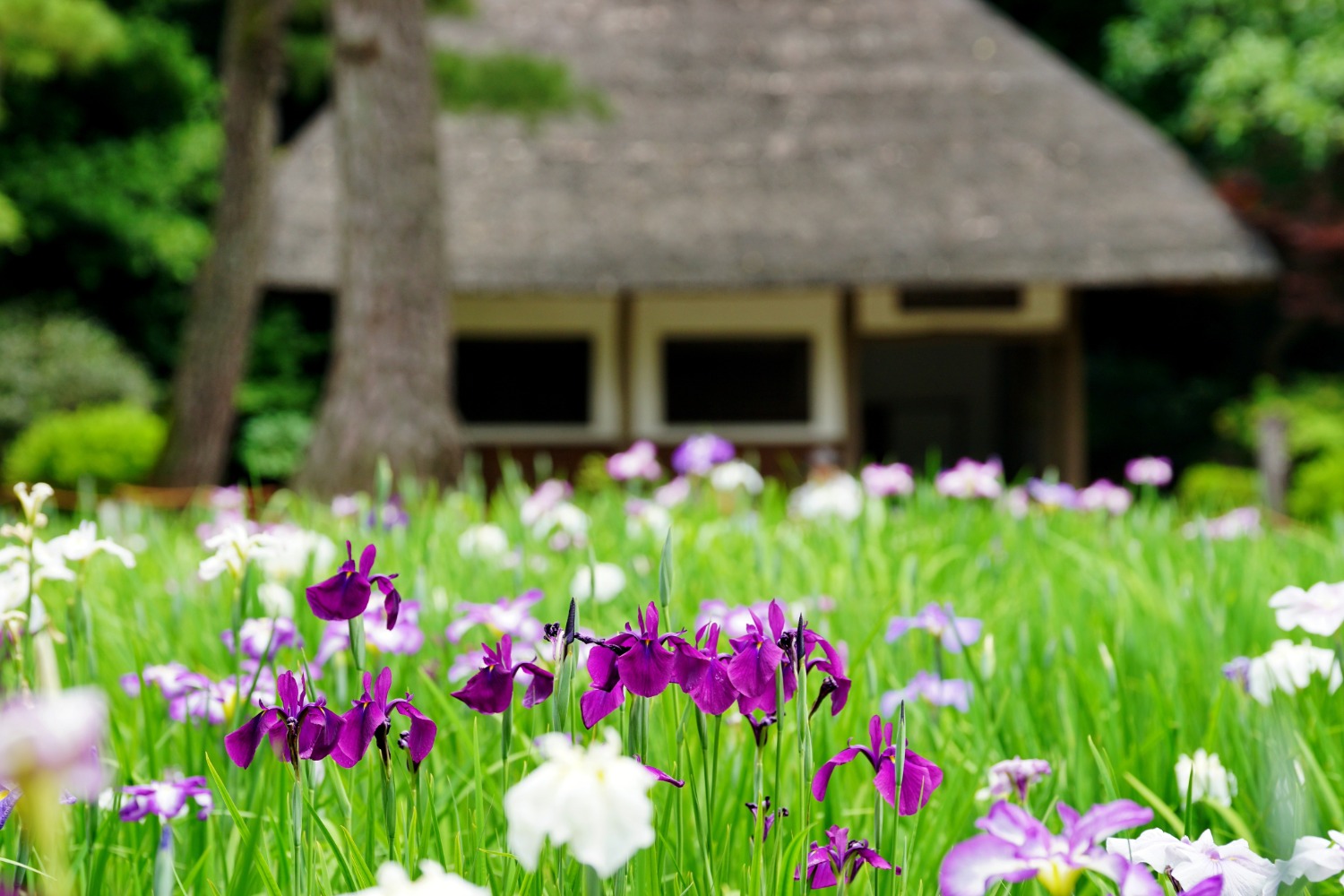
A feudal lord’s garden associated with the Mito Tokugawa family, created in the early Edo period. In early summer, about 660 clumps of Japanese irises bloom in the “iris field,” creating a charming rural landscape. During the event period, a wooden boardwalk is set up beside the iris field so you can enjoy the flowers up close. A recommended spot where you can enjoy both history and nature in the city center.
| Address | 1-6-6 Koraku, Bunkyo, Tokyo |
|---|---|
| Access |
Toei Oedo Line “Iidabashi Station,” Exit C3: about 3 minutes on foot JR “Suidobashi Station,” West Exit: about 5 minutes on foot |
| Flower types/scale | About 660 clumps of Japanese irises |
| Best time/Events |
“Enjoy the Japanese Irises” held May 23 (Sat) – June 14 (Sun), 2026 ・Hosho school Noh performance (May 23) ・Special lecture on Japanese irises (May 30) ・Garden guided tours (Sat, Sun & holidays at 11:00 and 14:00) ・Japanese iris–flavored soft-serve ice cream available |
| Admission fee |
Adults 300 yen, ages 65+ 150 yen ※Elementary school students and younger, and junior high school students living or studying in Tokyo: free |
| Opening hours | 9:00〜17:00 (last entry 16:30) |
Kiyosumi Gardens
Koto City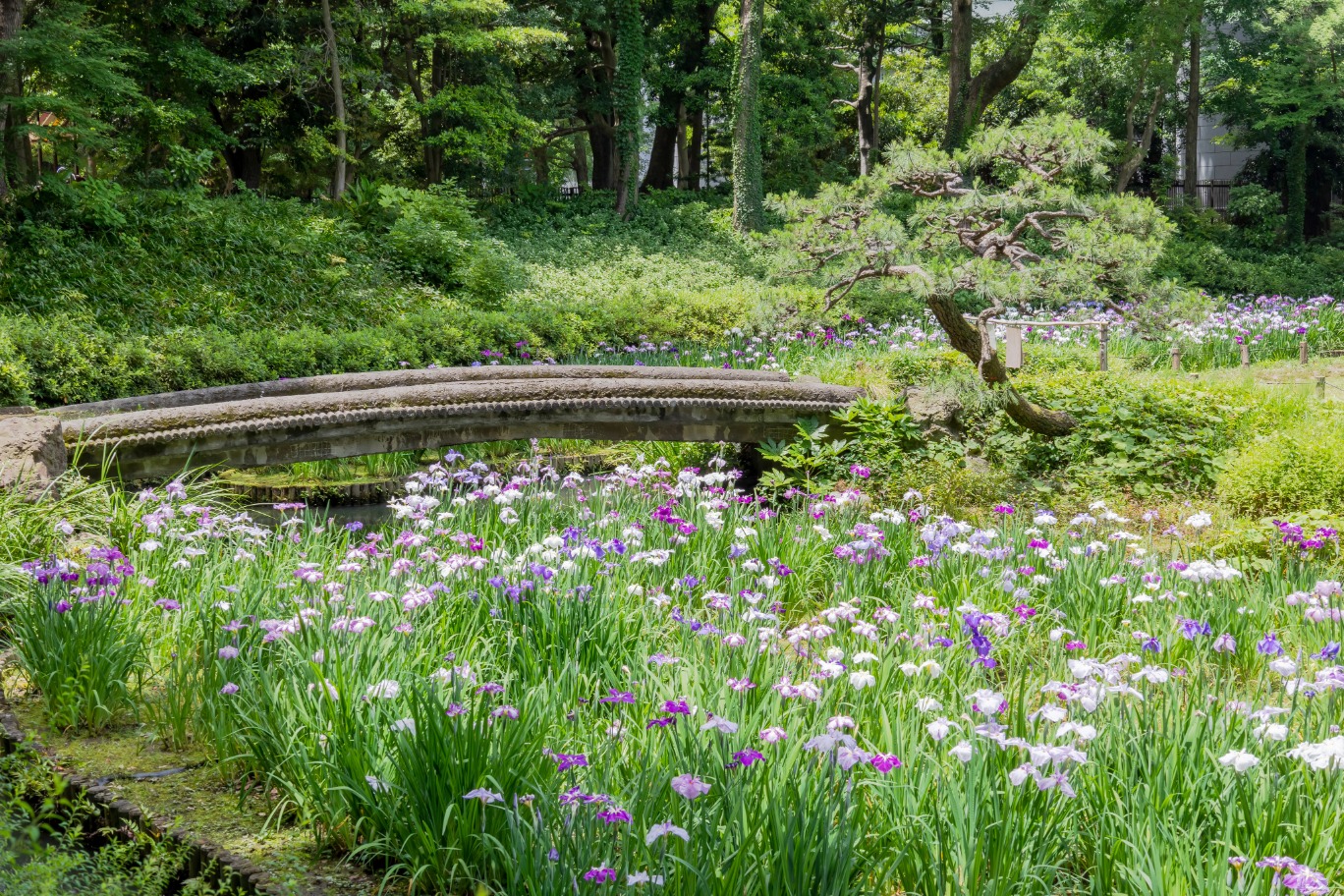
At Kiyosumi Gardens, a representative Meiji-era strolling pond garden, clusters of Edo-type Japanese irises color the waterside in early summer. The harmony between the beautiful Japanese garden, adorned with famous stones, and the dignely blooming irises is splendid. It’s easily accessible from Kiyosumi-shirakawa Station, and it’s a great spot for a stroll combined with visits to stylish cafes nearby.
| Address | 3-3-9 Kiyosumi, Koto City, Tokyo |
|---|---|
| Access | About a 3-minute walk from Exit A3 of Kiyosumi-shirakawa Station on the Toei Oedo Line and Tokyo Metro Hanzomon Line |
| Flower types/scale |
Mass plantings of Edo-type Japanese irises ※ Bridge construction over the iris field through around July 2026 (partial closures in effect) |
| Best viewing time | Typically late May to mid-June |
| Admission |
Adults 150 yen; ages 65+ 70 yen ※ Free for elementary school children and younger, and for junior high school students living or studying in Tokyo |
| Opening hours | 9:00〜17:00 (last entry 16:30) |
About the posted information
The information published in this article is based on publicly available information as of May 2026. Business hours, admission fees, and event schedules may change. Please check each facility's official website or official social media for the latest information before your visit.