【Harajuku】Meiji Jingu
Welcome a solemn New Year in a serene forest in the heart of the city
Dedicated to Emperor Meiji and Empress Shoken, this shrine is known for having the highest number of hatsumode visitors in Japan every year. Although located in the city center, the expansive evergreen forest surrounding the precincts creates a quiet, majestic atmosphere that makes you forget the urban bustle as soon as you step inside. Recommended for those who wish to calm their minds and offer prayers at the start of the New Year.
|
Name
|
Meiji Jingu
|
|
Address
|
1-1 Yoyogi-Kamizonocho, Shibuya-ku, Tokyo
|
|
Access
|
1 min on foot from JR “Harajuku Station” (West Exit); 1 min on foot from Tokyo Metro Chiyoda/Fukutoshin Line “Meiji-jingumae Station” (Exit 2)
|
|
New Year’s opening hours
|
Open all night from New Year’s Eve through New Year’s Day. Jan 2–3: around 6:40–18:00
|
|
Main blessings
|
Peace and stability of the nation, prosperity of the Imperial Household, household safety, good health, prayers for good matches, success in examinations, etc.
|
|
Official site
|
https://www.meijijingu.or.jp/
|
【Asakusa】Senso-ji (Senso-ji)
Celebrate the New Year with lively downtown Edo atmosphere
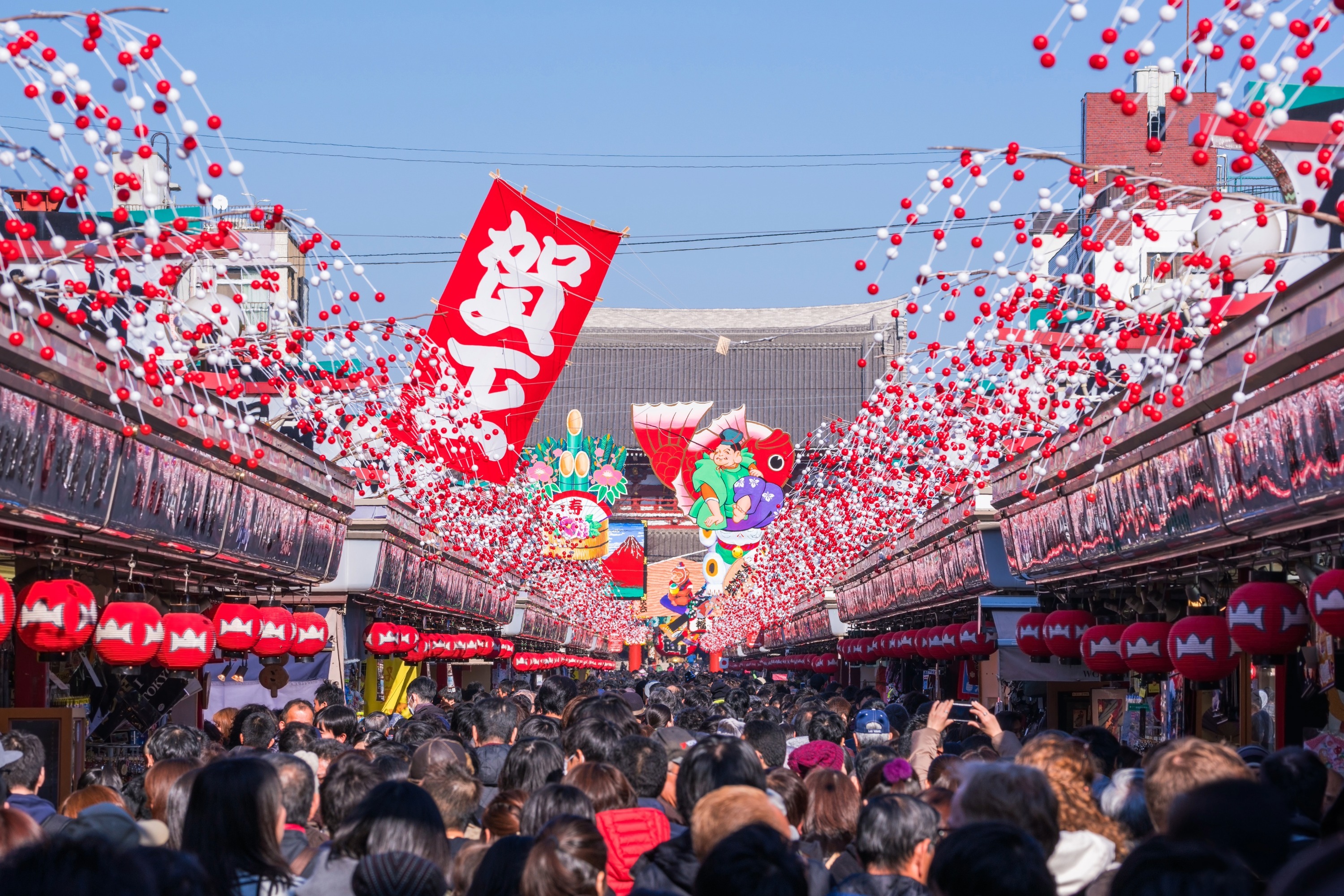
With a history of about 1,400 years, this is the oldest temple in Tokyo and is affectionately known as the “Asakusa Kannon.” From the Kaminarimon Gate, symbolized by its large red lantern, the Nakamise-dori shopping street leads to the main hall, lined with many shops and filled with New Year cheer. It’s perfect for those who want to welcome the New Year in a lively atmosphere while enjoying traditional sweets and small souvenirs.
|
Name
|
Senso-ji
|
|
Address
|
2-3-1 Asakusa, Taito-ku, Tokyo
|
|
Access
|
5 minutes on foot from “Asakusa Station” on the Tobu Skytree Line, Tokyo Metro Ginza Line, Tsukuba Express, and Toei Asakusa Line
|
|
New Year opening hours
|
Closes once at 18:30 on New Year’s Eve and reopens at 0:00 on New Year’s Day. The main hall may be open all day from Jan 1–3
|
|
Main blessings
|
Wish fulfillment
|
|
Official website
|
https://www.senso-ji.jp/
|
[Nagatacho] Hie Shrine
Pray for good fortune at a prestigious shrine perched on a hill in the city center
Said to have been founded to guard the rear “demon gate” of Edo Castle, this prestigious shrine is associated with the Tokugawa shogunate. The monkey, considered a messenger of the gods, is called “Masaru,” a wordplay meaning “evil departs” and “to excel,” and is known for blessings such as warding off evil, career luck, and business prosperity. Despite its location among city high-rises, it is surrounded by lush greenery, and the convenience of escalators up to the precincts is another draw.
|
Name
|
Hie Jinja (Hie Shrine)
|
|
Address
|
2-10-5 Nagatacho, Chiyoda-ku, Tokyo
|
|
Access
|
3-minute walk from Exit 2 of “Akasaka Station” on the Tokyo Metro Chiyoda Line; 3-minute walk from Exit 7 of “Tameike-sanno Station” on the Namboku and Ginza Lines
|
|
New Year gate hours
|
Jan 1: 0:00–18:00; from Jan 2 onward: 6:00–18:00
|
|
Main blessings
|
Warding off misfortune, safe childbirth, matchmaking, business prosperity, corporate prosperity
|
|
Official website
|
https://www.hiejinja.net/
|
[Kanda] Kanda Myojin
A deity of business prosperity protecting Akihabara, Tokyo’s IT district
The general tutelary deity of 108 neighborhoods in central Tokyo, including Kanda, Nihonbashi, and Akihabara. It is known for many blessings such as family harmony, matchmaking, business prosperity, and protection from calamities. In particular, thanks to its proximity to Akihabara, IT-related amulets are popular. Recommended for businesspeople wishing to boost their work luck and those interested in the latest technology.
|
Name
|
神田明神
|
|
Address
|
東京都千代田区外神田2-16-2
|
|
Access
|
5 minutes on foot from JR/Tokyo Metro「御茶ノ水駅」、5 minutes on foot from Tokyo Metro Chiyoda Line「新御茶ノ水駅」、7 minutes on foot from JR「秋葉原駅」
|
|
Opening hours during the New Year period
|
Opens at 0:00 on New Year’s Day. Open for worship 24 hours during the first three days of the year
|
|
Main blessings
|
Matchmaking, business prosperity, warding off calamities and misfortune, luck in competition
|
|
Official website
|
https://www.kandamyoujin.or.jp/
|
【湯島】湯島天満宮(湯島天神)
Pray to the deity of learning! For exam takers and those aiming to obtain qualifications
A shrine dedicated to Sugawara no Michizane, known as the deity of learning. Affectionately called「Yushima Tenjin」, it attracts many students during exam season who come to pray for success. In addition to academic achievement, it is also revered as a deity of good fortune and strength. Recommended for those setting goals for the New Year and aiming to obtain qualifications or improve their skills.
|
Name
|
湯島天満宮
|
|
Address
|
東京都文京区湯島3-30-1
|
|
Access
|
About 2 minutes on foot from Exit 3 of Tokyo Metro Chiyoda Line「湯島駅」
|
|
Opening hours during the New Year period
|
Jan 1: 0:00~21:00、Jan 2–3: 6:00~21:00
|
|
Main blessings
|
Academic achievement, prayers for exam success, good fortune
|
|
Official website
|
http://www.yushimatenjin.or.jp/pc/index.htm
|
【飯田橋】東京大神宮
Pray for good relationships at a matchmaking power spot
Affectionately known as「Tokyo’s Ise-sama」, this prestigious shrine enshrines the deities of Ise Jingu. Having originated the Shinto wedding ceremony, it is extremely popular as a power spot for matchmaking. It is recommended not only for those seeking success in love, but also for anyone looking for good connections in work and human relationships. A wide variety of charmingly designed amulets is also available.
|
Name
|
東京大神宮
|
|
Address
|
東京都千代田区富士見2-4-1
|
|
Access
|
5 minutes on foot from JR/Tokyo Metro「飯田橋駅」
|
|
Opening hours during the New Year period
|
New Year’s Day: midnight–9:00 p.m.; from Jan 2 onward: 6:00 a.m.–9:00 p.m.
|
|
Main blessings
|
Matchmaking, success in romance, household safety
|
|
Official website
|
https://www.tokyodaijingu.or.jp/
|
【芽公園】Zojoji Temple
Pray for victory at a temple linked to the Tokugawa family, with views of Tokyo Tower
A temple with over 600 years of history, known as the Tokugawa shogunate’s family temple. Its beautiful scenery with Tokyo Tower as a backdrop is also a highlight. The “Black Principal Image of Amida Nyorai,” once the personal Buddha of Tokugawa Ieyasu, is known as the “Buddha of Victory,” believed to bring better luck in contests and ward off misfortune. Recommended for those who want to start the new year with strength.
|
Name
|
Zojoji Temple
|
|
Address
|
東京都港区芝公園4-7-35
|
|
Access
|
Toei Mita Line: “Onarimon Station”/“Shibakoen Station” 3 min on foot; JR “Hamamatsucho Station” 10 min on foot
|
|
New Year opening hours
|
Dec 31, 10:00 p.m.–Jan 1, 6:00 p.m.; from Jan 2 onward, 9:00 a.m.–5:00 p.m.
|
|
Main blessings
|
Victory luck, warding off misfortune, business prosperity, household safety
|
|
Official website
|
https://www.zojoji.or.jp/
|
Basic etiquette for Hatsumode
To worship comfortably, know the basic manners. Note that some points differ between shrines and temples.
Shrine etiquette
-
1. Bow before the torii: This is the entrance to the gods’ domain. Avoid the center of the approach and walk along the sides.
-
2. Purify at the temizuya: Using the ladle, cleanse left hand→right hand, then receive water in your left hand to rinse your mouth.
-
3. Two bows, two claps, one bow: At the worship hall, bow deeply twice, clap twice. After your prayer, finish with a deep bow.
Temple etiquette
-
1. Put palms together and bow at the main gate: Do not step on the threshold; step over it to enter the grounds.
-
2. Purify at the water basin: Same as at a shrine. If there is a large incense burner, bathe in the smoke to purify yourself.
-
3. Quietly put your hands together: In the main hall, do not clap; place your hands together in front of your chest and pray quietly. Finish with a deep bow.
Tips for enjoying Hatsumode
Tokyo’s hatsumode spots each have their own unique features and charms. Choose the shrine or temple that best suits your wishes and preferences. As heavy crowds are expected during the first three days of the New Year, it’s recommended to visit in the early morning or evening, or during the relatively less crowded period of Matsu-no-uchi (until around January 7).