When an earthquake occurs, the most important thing is the basic principle "Get low, protect your head, and stay still". Regardless of nationality, remember the following guidelines.
When inside a building (hotel, restaurant, shopping mall)
🛑
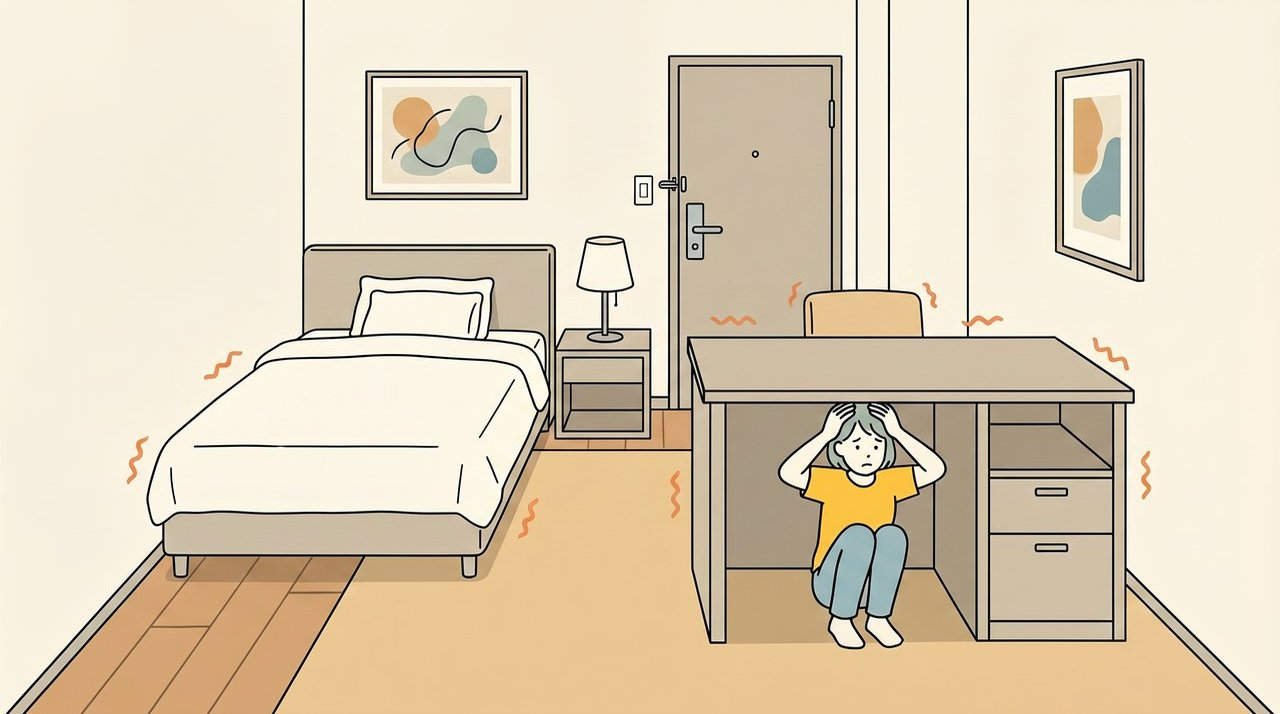
Stay where you are
Rushing outside is extremely dangerous due to the risk of falling objects (such as signboards and broken glass).
🛡️
Protect your head
Move away from windows and large furniture, and take cover under a sturdy table or desk to protect your head.
⏳
Wait until the shaking stops
Do not move until the shaking subsides; afterward, act calmly and follow in-house announcements and staff instructions.
⚠️
Do not use elevators
Never use elevators during an earthquake. There is a risk of becoming trapped.
🏨 Things to check at a hotel for peace of mind
-
Route from your room to the nearest emergency exit — After check-in, walk the corridor to confirm it
-
Location of the front desk and how to contact it — Check the extension number so you can contact them immediately in an emergency
-
Evacuation guidance posted in the building — Review the evacuation route maps posted on each floor
-
Keep shoes by your bedside — To prepare for nighttime earthquakes, this helps protect your feet from glass shards
When you are on a train or subway
🚨
Automatic stop system
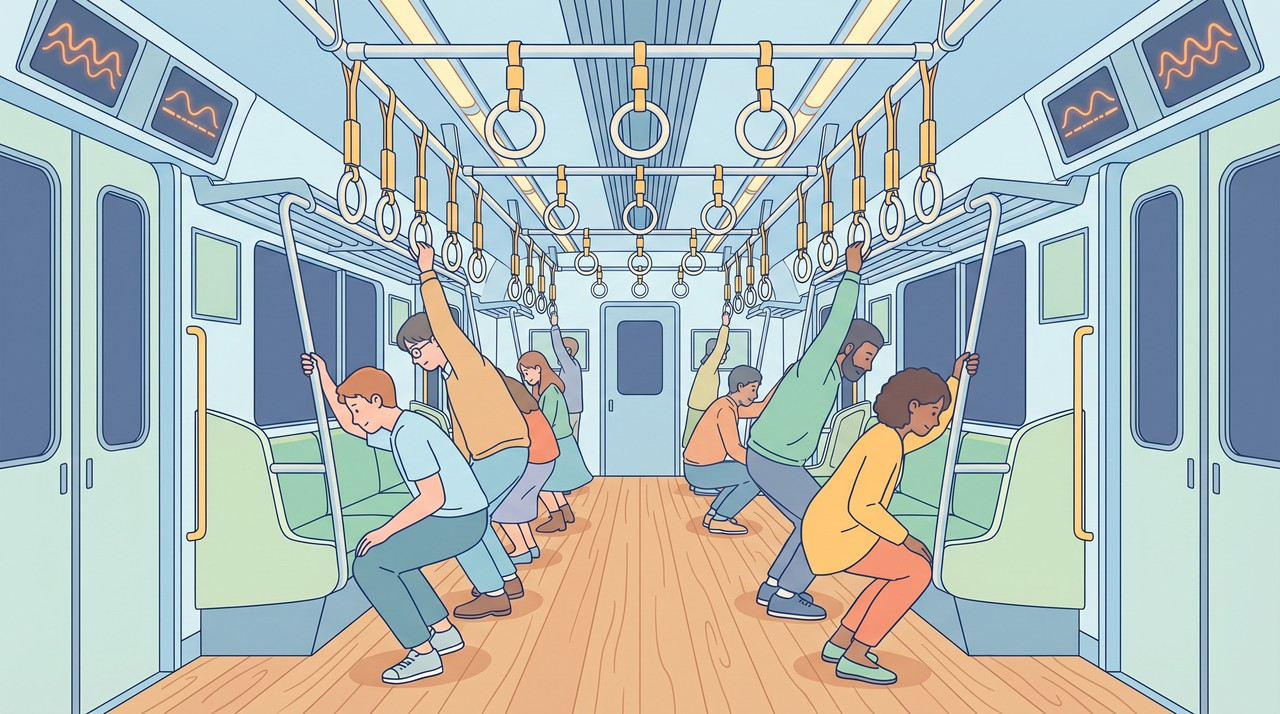
In Japan, the railway system automatically makes an emergency stop when it detects an earthquake. Be prepared for a sudden brake.
✋
Hold on firmly
If standing, hold on firmly to a handrail or strap. If seated, lower your posture and protect your head with a bag or a similar item.
🚪
Do not get off on your own
Even if the train stops, do not open the doors and step down onto the tracks on your own. Wait for announcements from the crew and evacuate according to their instructions.
When you are outdoors (on the street or in a park)
🏘️
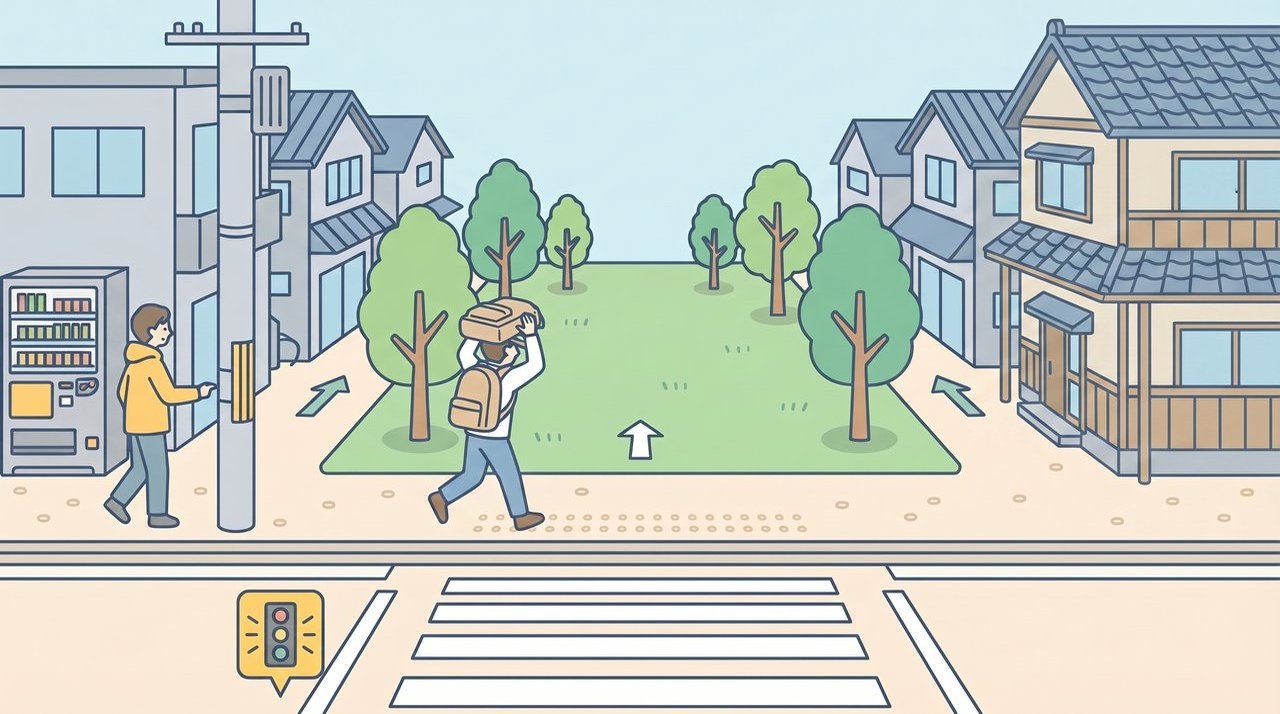
Move away from buildings and structures
Move away from nearby buildings, block walls, utility poles, and vending machines. There is a risk of falling signs and window glass.
🏞️
Move to an open area
If possible, move to an open, safe area such as a park or plaza, lower your posture, and wait for the shaking to stop.
⚠️ Places outdoors to be especially careful
-
Near glass‑walled buildings — Windows in high‑rise buildings may shatter and fall
-
Streets with large signs or exterior fixtures — In busy shopping areas, be especially careful of falling signs
-
Areas around tourist spots where crowds form easily — Panic can lead to crowd crush; remain calm
-
On bridges and under overpasses — Shaking can be amplified, so move away quickly
Odaiba, Toyosu, and along the Sumida River—Tokyo has many popular waterfront sightseeing spots. If you encounter an earthquake in these areas, precautions different from those in ordinary urban settings are required.
Major sightseeing spots in the Tokyo bayside area
Odaiba Low-lying area
Toyosu Around Toyosu Market
Along the Sumida River Around Asakusa and Tokyo Skytree
🌊
Be aware of the possibility of tsunamis
Topographically, Tokyo Bay is less likely to receive large tsunamis directly from the open ocean, but a Tokyo metropolitan epicentral earthquake could generate tsunamis up to about 2.5 m. If you feel strong shaking, move to higher ground without waiting for a tsunami warning.
🏔️
Evacuate to high ground or upper floors of buildings
Move away from the coast and go to the highest place possible. If there is no nearby high ground, it is effective to evacuate to the 3rd floor or above of a reinforced-concrete building.
📢
Check official information
When traveling without local familiarity, rather than deciding to “wait and see,” check signage and announcements around you and keep your attention on moving in a safe direction.
💡 Advice for waterfront areas
-
Tsunamis can come in multiple waves. Even if the first wave is small, do not let your guard down; stay at high ground until the warning is lifted.
-
Be cautious even when you are along a river. Because tsunamis can run up rivers, move to higher ground away from the river.
-
In the waterfront subcenter area (such as Odaiba), tsunami evacuation facilities are in place. Check the surrounding evacuation guidance signs.
For travelers who face language barriers, securing multilingual sources of information is extremely important. Before arriving in Japan, prepare the following apps and services.
Recommended apps and services
📱
Safety tips
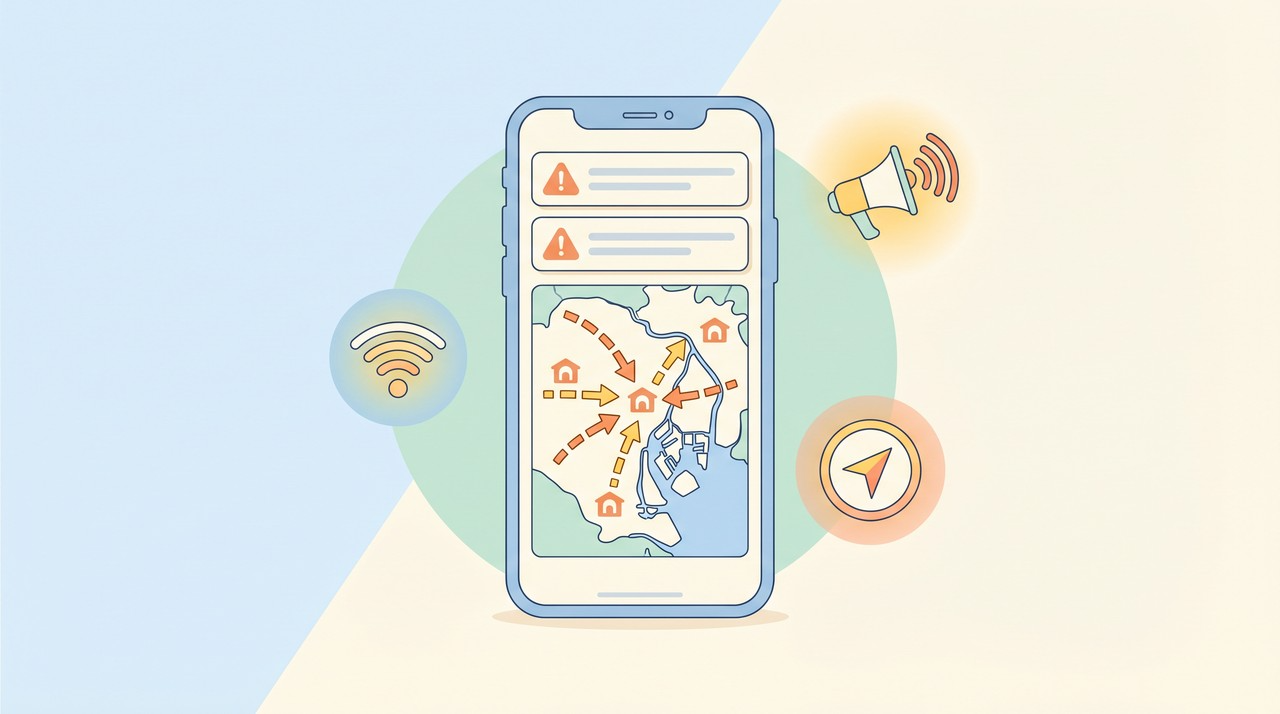
A free app supervised by the Japan Tourism Agency. Supports 15 languages and receives Earthquake Early Warnings, tsunami warnings, and emergency weather warnings via push notifications. Also equipped with a disaster response flowchart and communication card functions.
Supports 15 languages · Free
🗺️
キタコンDX
Tokyo’s system for people who have difficulty returning home. Available in English, Chinese (Traditional and Simplified), and Korean, allowing you to check real-time disaster information and the availability of temporary stay facilities. Accessible via the LINE app.
Multilingual support
Learn about Japan’s “Shindo” seismic intensity scale
Japan’s “Shindo” is different from magnitude; it indicates how strong the shaking is at a given location. It is shown in 10 levels from 0 to 7 (with 5 and 6 divided into lower and upper).
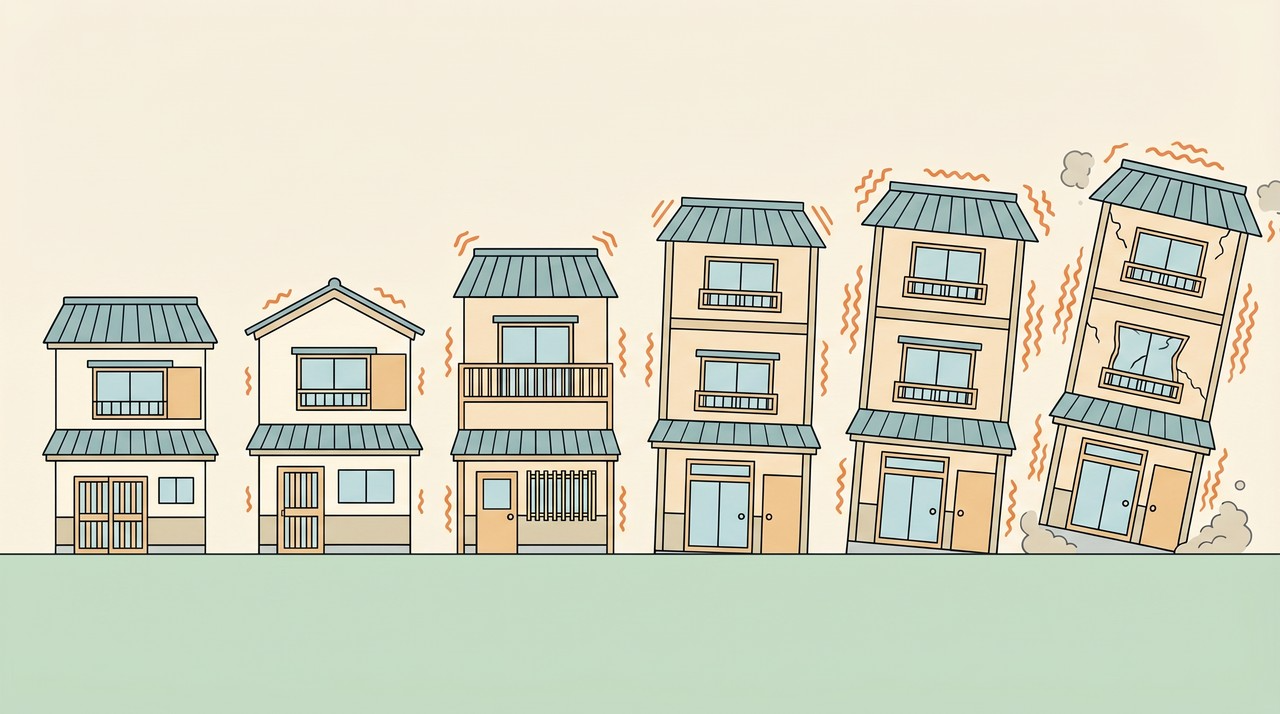
0People do not feel the shaking
1Slight shaking is felt
2Many people feel the shaking
3Dishes in shelves rattle
4Hanging objects sway greatly
5 LowerYou feel the need to hold onto something
5 UpperCannot walk without holding onto something
6 LowerDifficult to remain standing
6 UpperCannot move except by crawling
7Overwhelmed by the shaking and unable to move
💡 Advice for Foreign Travelers
-
Do not be alarmed by the Earthquake Early Warning sound. The alert that may suddenly sound on your smartphone notifies you a few to several tens of seconds before strong shaking arrives. When you hear it, take protective action immediately.
-
Japan Visitor Hotline(050-3816-2787) is a 24-hour multilingual support line provided by JNTO(Japan National Tourism Organization)(English・Chinese・Korean・Japanese)。
-
Saving a copy of your passport on your smartphone can be helpful in an emergency.
-
Carry a note with the name and address of your accommodation written in Japanese.
Even for travelers from within Japan, experiencing a disaster in Tokyo, where you may not be familiar with the area, can be unsettling. Make use of the tools you are accustomed to and familiarize yourself with Tokyo’s unique disaster-prevention infrastructure.
Recommended Apps
🔔
Yahoo!防災速報
Receive push notifications for a wide range of hazards such as earthquakes, tsunamis, heavy rain, and heatstroke. With location-based alerts, you can automatically get information even at your destination.
Free
🏢
東京都防災アプリ
Includes a feature to check shelters and temporary stay facilities on a map near your current location, which is very useful when you are unfamiliar with the area.
Free
Disaster Message Dial (171) and web171
During large-scale disasters, telephone lines become congested and it can be difficult to contact family. For safety confirmation, use the “Disaster Message Dial (171)” and the online “Disaster Message Board (web171)”. You can try them on the 1st and 15th of each month, etc., so we recommend confirming how to use them with your family before your trip.
☎️ How to use the Disaster Message Dial
-
To record: Call “171” → Press “1” → Enter your home phone number → Record your message
-
To play: Call “171” → Press “2” → Enter the other party’s phone number → Play the message
-
Trial-use days: 1st and 15th of every month, New Year’s holidays(1/1~1/3), Disaster Prevention Week(8/30~9/5), Disaster Prevention and Volunteer Week(1/15~1/21)
Measures for people unable to return home and Return-Home Support Stations
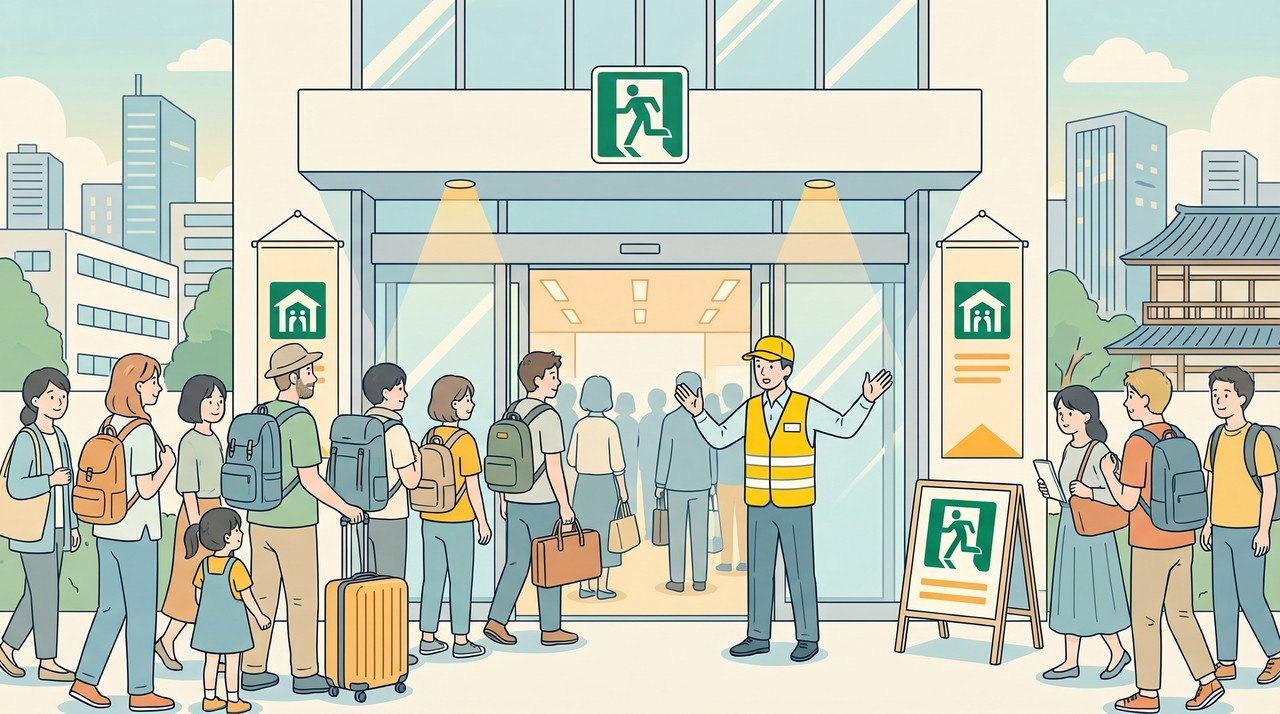
After a major earthquake, trains and subways may suspend operations for a long time for safety checks. Do not force yourself to return to the hotel; please wait at stations, commercial facilities, or at “Temporary Stay Facilities” designated by the Tokyo Metropolitan Government.
🚶 What is a Return-Home Support Station?
-
Convenience stores, family restaurants, and gas stations are designated as “Return-Home Support Stations during Disasters.”
-
At these stores, you can receive support such as provision of tap water and toilets, and road information.
-
Look for the yellow sticker. You can find it at the entrances of convenience stores, etc.
Even after the shaking stops, beware of aftershocks (earthquakes that follow the main shock). Stay in a safe place and gather accurate information.
Free disaster Wi‑Fi “00000JAPAN”
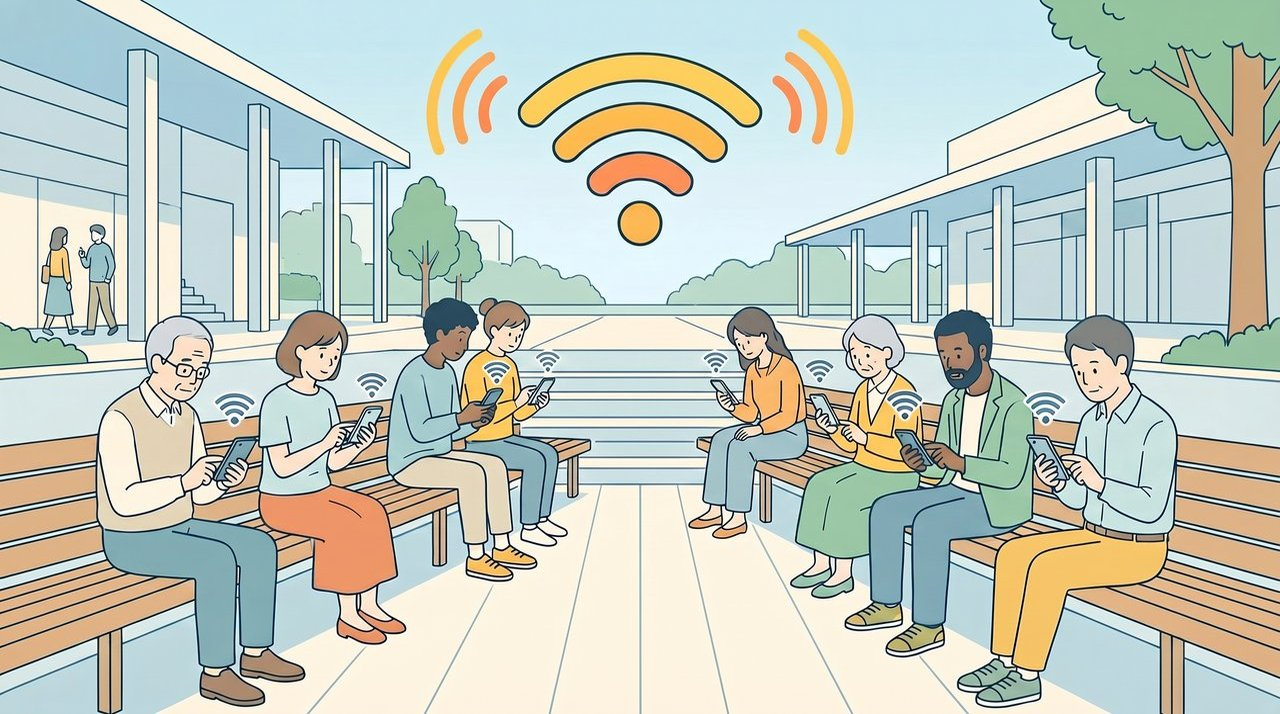
During large-scale disasters, telecom carriers provide a service called “00000JAPAN (Five Zero Japan)” that opens public wireless LAN for free.
1
Open your smartphone's Wi-Fi settings
➡️
2
Select the network name “00000JAPAN”
➡️
3
No password required; connection to the internet is complete
What to do if you don't know where to evacuate
After an earthquake, you may feel anxious and think, “I don't know where to go.” However, when traveling in an unfamiliar area, attempting to move long distances based on your own judgment can be dangerous.
📍
First, check the safety of where you are
Do not force yourself to move far; first confirm whether your current location is safe. If you are in a facility, hotel, or station, check the guidance from staff or attendants.
🛈
Check signage and official information
Even when looking for an evacuation site, it is important to act calmly while checking signage and official information. Make use of Tokyo’s temporary stay facilities and Returning-Home Support Stations.
🗣️
Ask people around you for help
In Japan, there is a culture of helping each other during disasters. If you are in trouble, try speaking to nearby people or store staff. Even if you don't share a language, your smartphone's translation apps can help.
⚠️ Important precautions after an earthquake
-
If you are near the coast, there is a risk of a tsunami. If you feel shaking, evacuate immediately to higher ground or to the upper floors of a sturdy building without waiting for a tsunami warning.
-
Do not be misled by unreliable information on social media (fake news). Check official announcements from local governments and information from trusted news organizations such as NHK.
-
Prepare for aftershocks, stay inside the building until it is confirmed safe, and watch out for broken glass and falling objects.
-
00000JAPAN is not encrypted. Use it only for safety check-ins and gathering information, and avoid entering personal information or passwords as much as possible.
|
Contact
|
Phone number
|
What they handle
|
|
Police
|
110
|
Report accidents and crimes
|
|
Fire and Ambulance
|
119
|
Report fires, request an ambulance
|
|
Disaster Message Dial
|
171
|
Record/play safety messages for family members
|
|
Japan Visitor Hotline
|
050-3816-2787
|
24-hour multilingual support by JNTO (EN, CN, KR, JP)
|
|
Tokyo Metropolitan Government Disaster Prevention website
|
—
|
https://www.bousai.metro.tokyo.lg.jp/
|
📞
How to make a call
In Japan, 110(police) and 119(fire/ambulance) are free, and you can call them from mobile phones as well. Even if you don't speak Japanese, calling may connect you to an interpreting service. Stay calm and say something like “English please.”
To enjoy your trip to Tokyo with greater peace of mind, it's recommended to do a little preparation before departure. Refer to the checklist below to confirm your preparations before traveling.
Checklist before sightseeing
-
Have a power bank — In a disaster, your smartphone is the most important information tool
-
Save your accommodation’s address and phone number — It's reassuring to also have a paper note separate from your smartphone
-
Make sure you can quickly open your map app — Download offline maps as well
-
Install disaster-information apps — Safety tips(for international visitors) and Yahoo!防災速報(for domestic users)
-
Check the hotel’s emergency exits — Confirm them right after check-in
-
Decide how to contact your family — Share methods such as Disaster Emergency Message Dial(171) or social media
-
Carry a little extra cash — Cashless payments may be unavailable during power outages
-
Save a copy of your passport(for international travelers) — Keep a photo on your smartphone
If an earthquake occurs while sightseeing in Tokyo, should I go outside immediately?
It depends on the situation. Inside a facility, rather than rushing outside, it may be safer to secure your safety on the spot and follow staff guidance. Buildings in Japan are built to strict seismic standards, so in many cases it is safer to remain indoors.
What should I do if an earthquake occurs while riding a train?
Do not try to get off the train; follow onboard announcements and staff instructions. Railways in Japan are equipped with systems that automatically perform an emergency stop when an earthquake is detected. At stations as well, avoid rushing off on your own and calmly check the information.
Is there anything I should at least prepare before traveling?
It is recommended to charge your smartphone (carry a mobile battery), save your accommodation information, check your map app, and install disaster information apps. When you arrive at the hotel, check the emergency exits and evacuation routes so you can act calmly in case of an emergency.
Even if I don't understand Japanese, can I get information during an earthquake?
Yes. The "Safety tips" app, supervised by the Japan Tourism Agency, supports 15 languages and can receive Emergency Earthquake Alerts and Tsunami Warnings via push notifications. In addition, the Japan Visitor Hotline (050-3816-2787) provides 24-hour support in English, Chinese, Korean, and Japanese.
After an earthquake, what should I do if trains stop and I can't get back to my hotel?
Do not try to walk back; please wait at stations, commercial facilities, or "temporary stay facilities" designated by the Tokyo Metropolitan Government. At "Return-Home Support Stations" (marked with a yellow sticker) such as convenience stores and family restaurants, you can access tap water and restrooms.