
Tokyo Travel Note / Photo Etiquette
Photo etiquette for sightseeing in Tokyo|No-photo areas, photographing people, and tips for posting on social media
Tokyo is full of places you’ll want to photograph—historic shrines and temples, beautiful gardens, popular sights, and seasonal events. Many people look forward to taking photos as travel memories and sharing them on social media.
However, in Japan, photography rules vary by attraction and photo spot, and there are points to keep in mind when photographing people and posting to social media. In some places, photography itself is prohibited, or prior permission is required.
Without realizing it, you might inconvenience others or cause unexpected trouble, so it’s important to learn the basic etiquette in advance.
This article introduces the photo etiquette you should know when sightseeing in Tokyo. Check no-photography locations and areas that require extra care, tips for photographing people, and how to post on social media, and enjoy taking photos in a way that everyone feels comfortable with!
01Five basic photo etiquette rules to follow in Tokyo
When taking photos at tourist sites, be considerate not only of yourself but also of those around you and the facility. First, here are five basic etiquette points to keep in mind wherever you are.
1. Check notices on photography bans and conditions
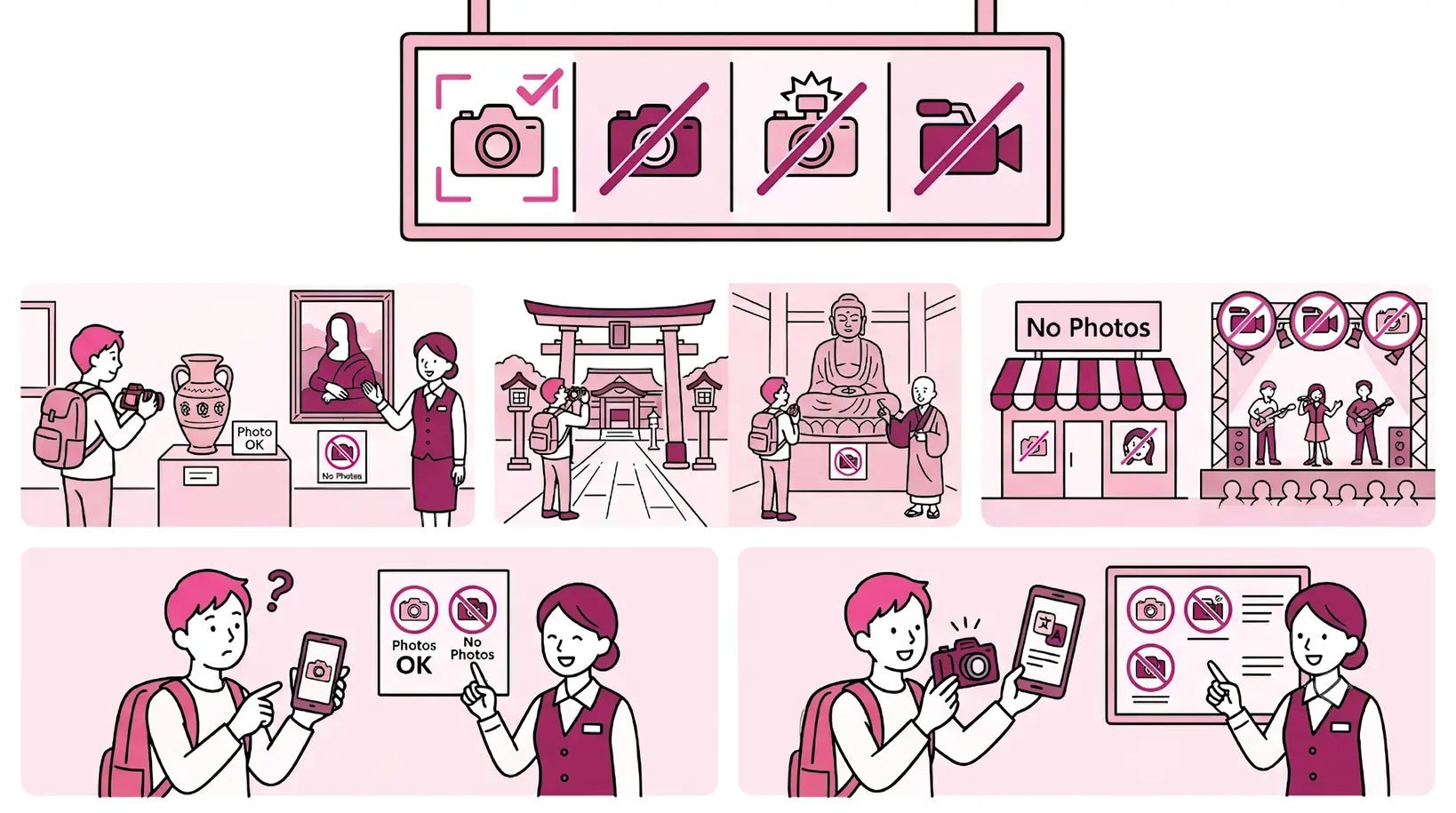
At tourist facilities, art museums, museums, and shrines/temples, photography may be prohibited or limited to certain areas.
Rules vary by facility, such as "No photography," "Photography allowed," "No flash," or "No video recording." Even where photography is permitted, some exhibits or specific areas may not be allowed to be photographed.
Pay special attention in the following places:
- Art museums and museums: permission to photograph varies by exhibit and special exhibition
- Shrines and temples: photography of the main hall, sacred objects, Buddhist statues, etc. may be partially prohibited
- Commercial facilities and shops: permission may be required to photograph inside the store, products, or staff
- Concerts and stage performances: photography and video recording during performances are often prohibited
If you are unsure whether photography is allowed, check the facility’s signs or ask the staff. Even if you can’t find guidance in your language, pointing to your camera or smartphone while asking can help you get the message across.
2. Do not enter private property or off-limits areas
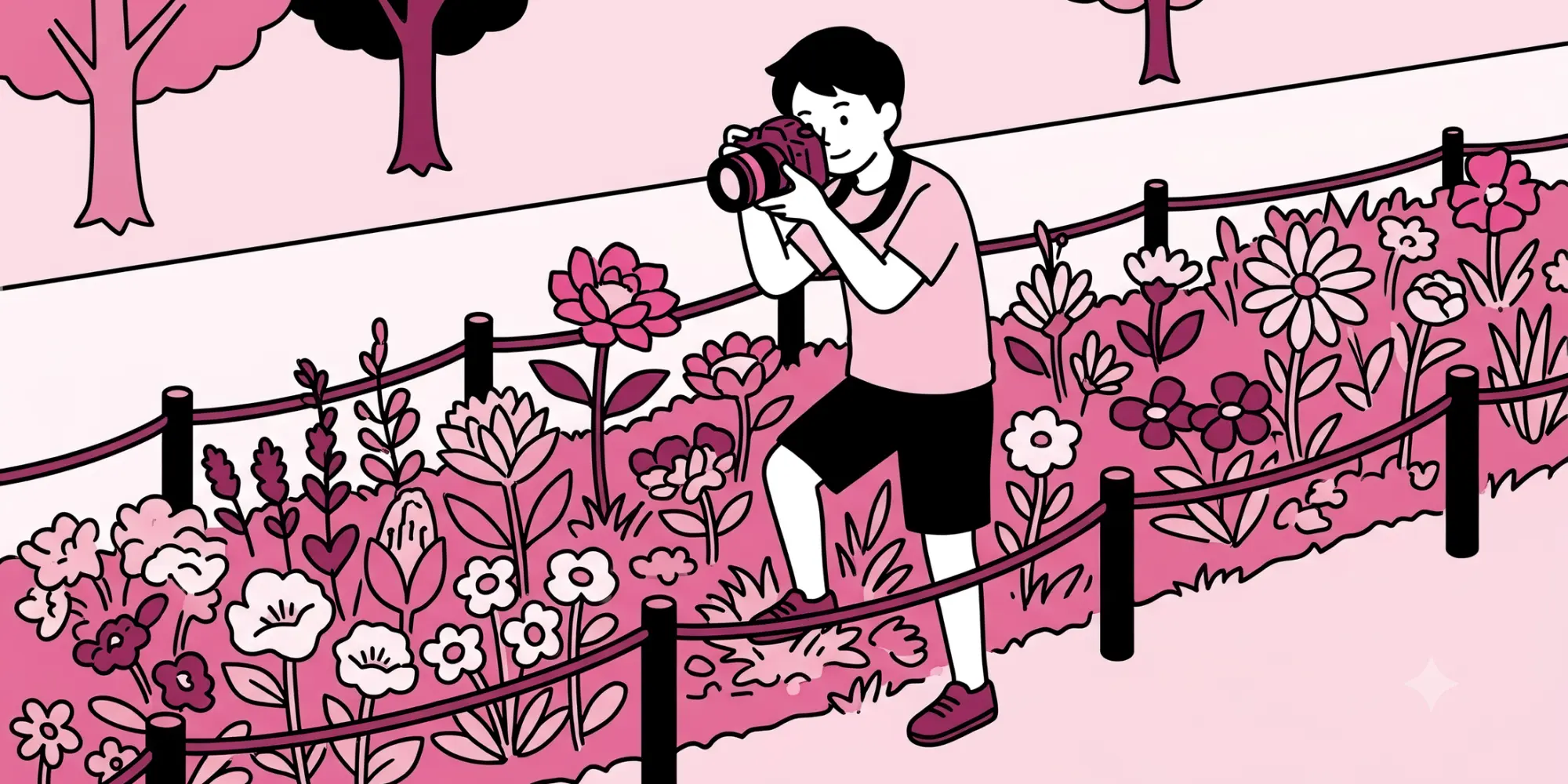
When you find a beautiful view or a popular photo spot, you naturally want to take the best possible shot. However, do not enter private property or restricted areas without permission for the sake of photography.
Around tourist spots there may be private residences or shop premises, farmland, and facility management zones. Even if a place is visible from the road, it is not necessarily open for free access.
Also, be careful to avoid the following actions:
- Crossing ropes or fences that mark off-limits areas
- Entering residential property or parking lots without permission
- Stepping into flowerbeds, lawns, or plantings to take photos
- Touching or climbing on exhibits or cultural properties
- Breaking branches or picking flowers for a photo
Even at places introduced as photo spots, prioritize local notices and the instructions of managers. Enjoy the scenery from designated paths and areas where shooting is allowed.
3. Take photos where you do not obstruct traffic
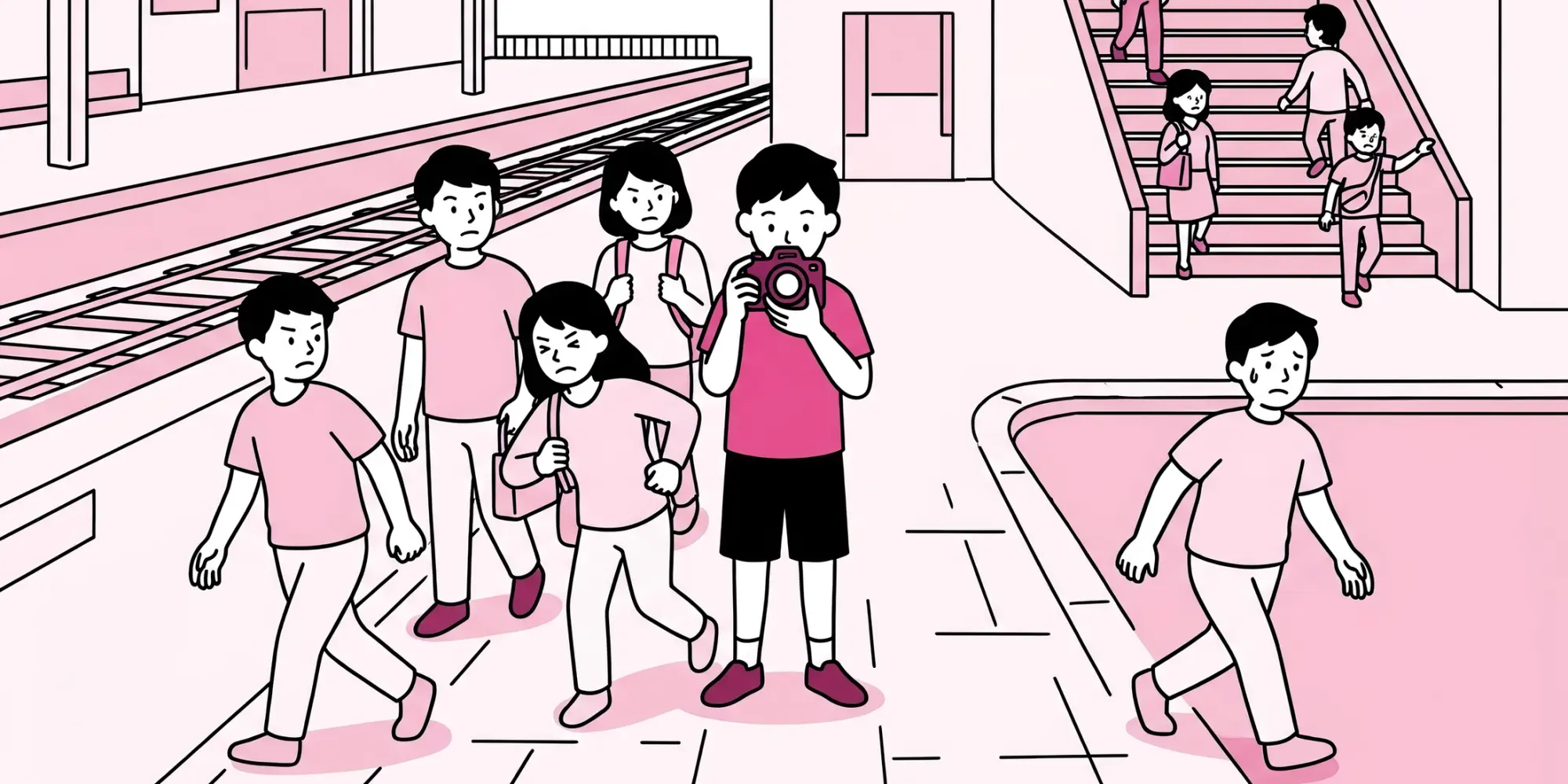
Popular tourist spots, areas around stations, and shopping streets are places with heavy foot traffic. Be careful not to block passageways or occupy the same spot for a long time while absorbed in taking pictures.
In particular, avoid the following behaviors:
- Stopping in the middle of sidewalks or roads to take photos
- Occupying shooting spots on station platforms, stairways, or near ticket gates
- Setting up tripods or extending selfie sticks in a way that blocks passage
- Monopolizing a popular photo spot for a long time
- Taking photos while ignoring people who are waiting their turn
When it’s crowded, finish shooting quickly and yield the spot to others. Tripods and selfie sticks may be prohibited depending on the facility, so it’s safer to check in advance.
4. Be mindful of flash and shutter sound
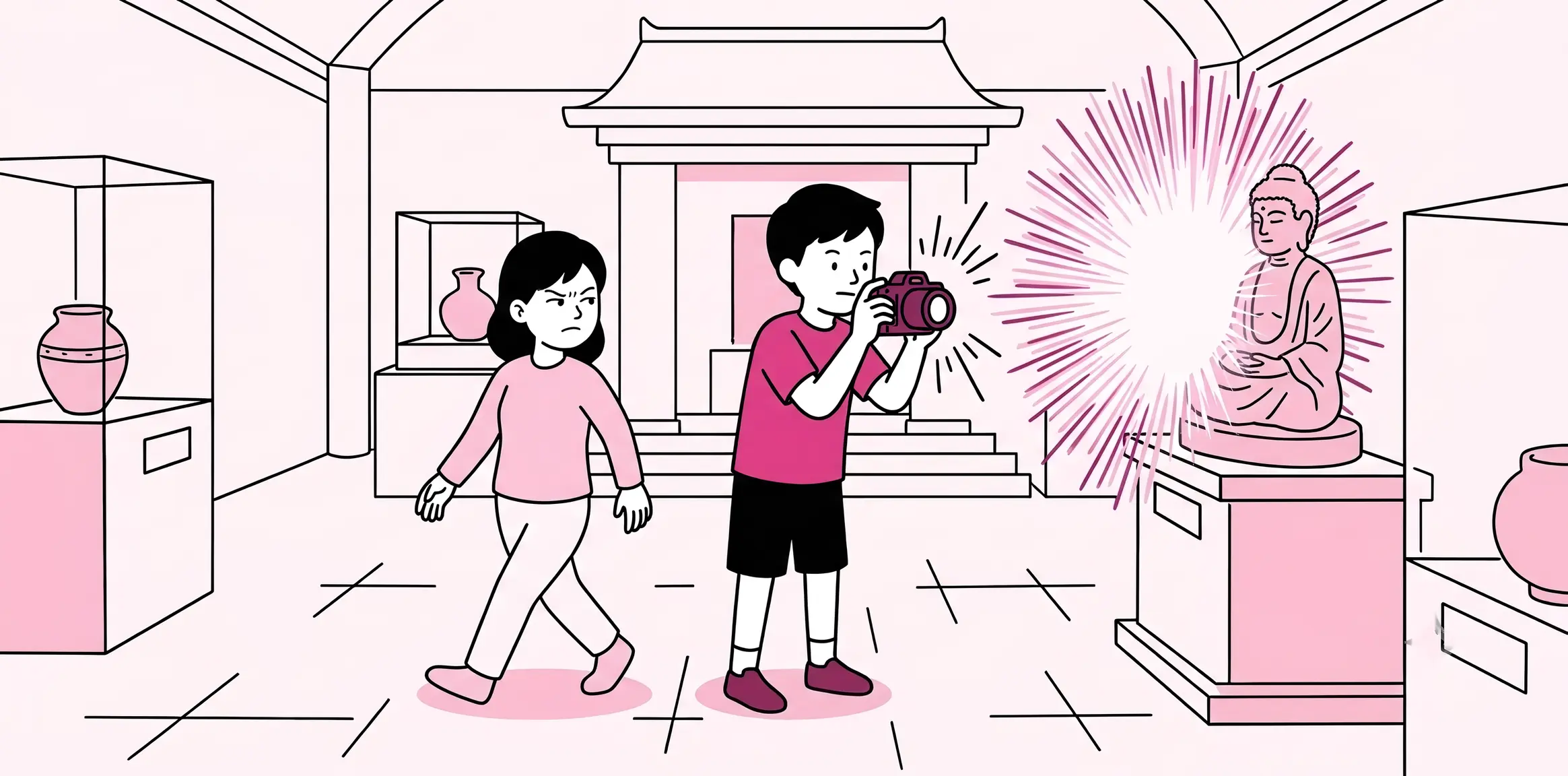
In indoor facilities and quiet sightseeing spots, you also need to be careful about flash and camera shutter sounds.
In art museums and museums, flash photography may be prohibited because strong light can affect exhibits. Also, in places where people are expected to be quiet, such as shrines and temples or libraries, shutter sounds and conversations among photographers can disturb those around you.
Before shooting, check your flash settings and use silent mode as needed. However, using silent mode does not mean you may take photos where photography is prohibited. Prioritize the facility’s rules.
5. Respect the people and scenery around you
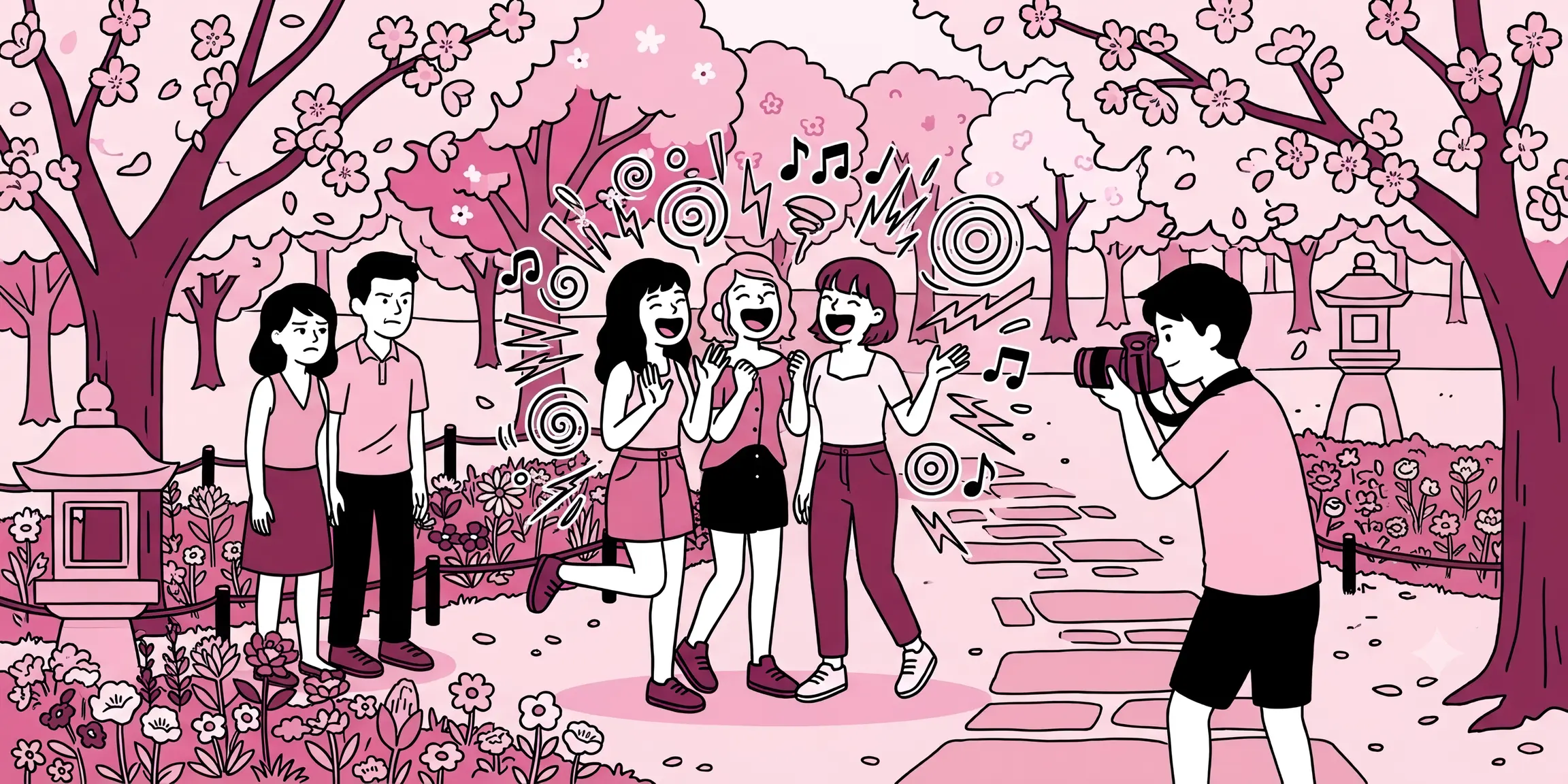
When taking photos, pay attention not only to the view in front of you but also to the surrounding situation.
When photographing nature such as cherry blossoms, autumn leaves, or flower fields, take care not to damage plants or enter restricted areas. Also avoid shouting for the sake of a shot, or having someone posing occupy a spot for a long time.
Photo spots are not yours alone. Enjoy them while yielding to others so that other tourists and local residents can also have a pleasant time.
02Places where you should refrain from shooting and areas requiring caution|Specific examples in Tokyo
Tokyo has many places where the streetscapes and the buildings themselves are attractive and make you want to take photos. However, depending on the location, taking photos can cause unease among people around you or lead to issues related to facility rules and rights.
Below are specific examples of places where photography may be prohibited or require prior confirmation. Photography is not uniformly banned in all of them, but these are points that warrant particular attention.
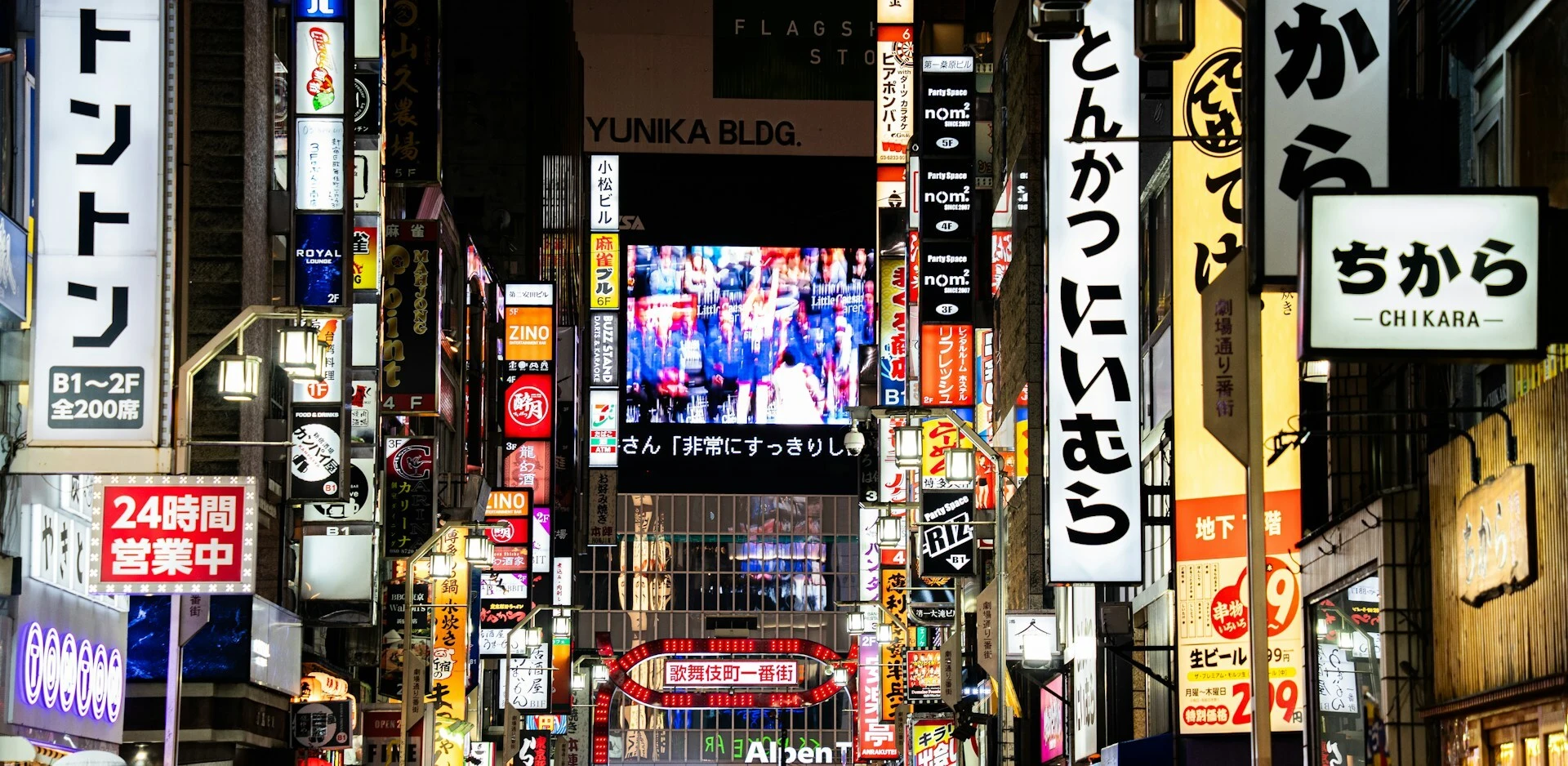
1. Alleys in entertainment districts such as Kabukicho
In bustling areas such as Shinjuku and Kabukicho, there are lively zones packed with restaurants and entertainment venues. The neon lights and distinctive streetscapes are appealing, but you should be careful when shooting in narrow alleys or near shop entrances.
In such places, not only passersby but also shop staff and people who solicit or promote to customers may end up in your photos. If you post the images you take on social media, faces, workplaces, or activity areas may be disclosed in ways the individuals did not intend, potentially leading to unexpected trouble.
Also, pointing your camera at people who dislike being photographed, or standing for a long time near store entrances, can lead to disputes with those around you.
- Do not point your camera at people who are soliciting customers or calling out to passersby
- Do not block shop entrances or alleys to take photos
- Do not take close-up shots of specific individuals or store staff without permission
- Check photos in which people are clearly visible before posting them on social media
In addition, Shinjuku Ward has ordinances to prevent activities such as customer solicitation and street scouting in public places. When visiting entertainment districts, do not follow solicitors, and be mindful of where you stop to take photos.
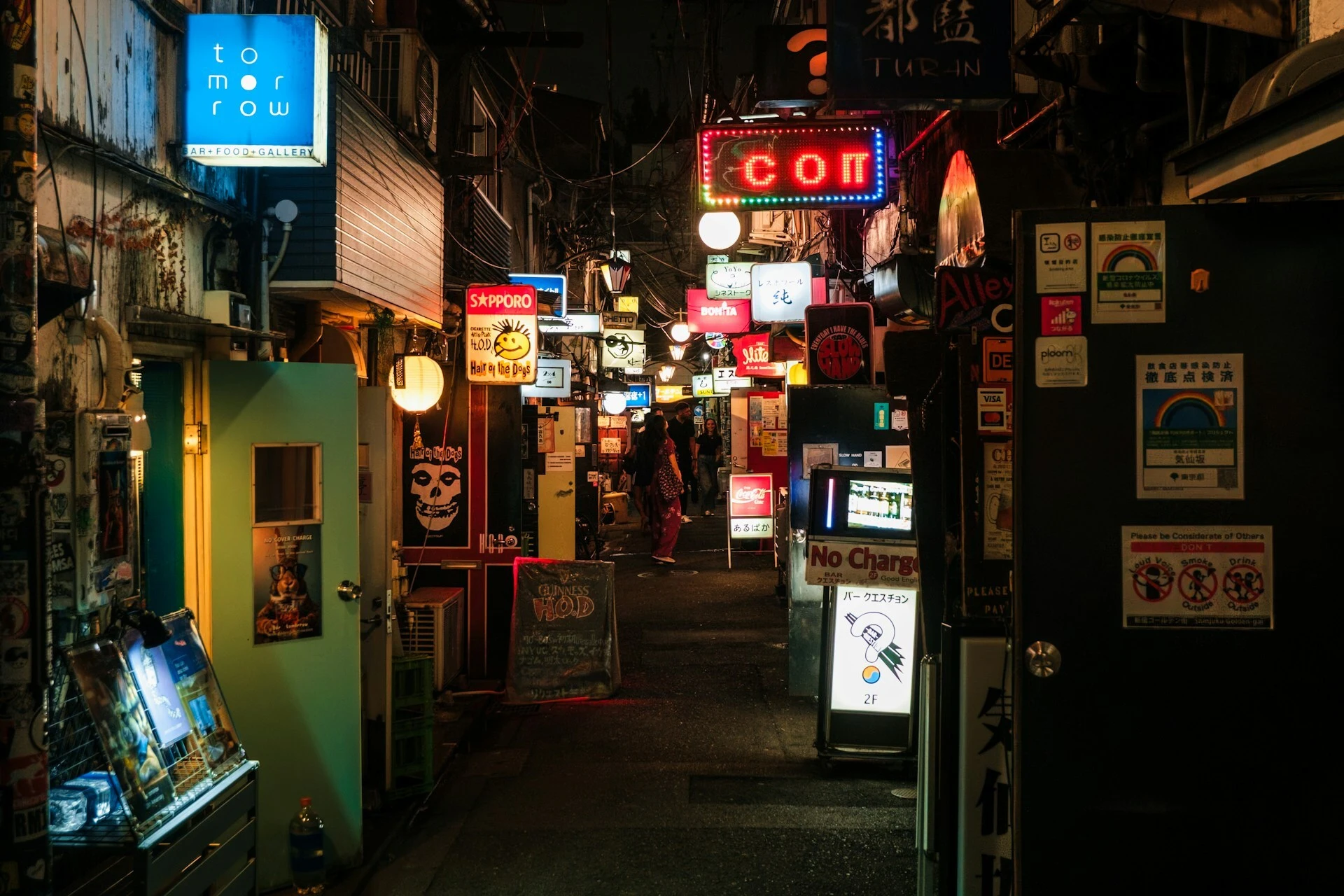
2. Areas such as Shinjuku Golden Gai that require permission for photography
Shinjuku Golden Gai is a popular sightseeing spot known for its rows of unique small bars and eateries. Its retro alleys and signboards are appealing, but there are specific rules regarding photography.
According to guidance from the Shinjuku Sanko Shopping District Promotion Association, the Golden Gai area consists of private roads, and permission is required for street photography or when making the area itself the subject of your photos.
Therefore, when visiting as a tourist, you may not always be free to photograph the streets or exteriors of shops. If you want to take pictures, check the official guidance in advance and obtain any necessary permissions.
Also, be sure to check each establishment’s policy regarding photography inside the premises.
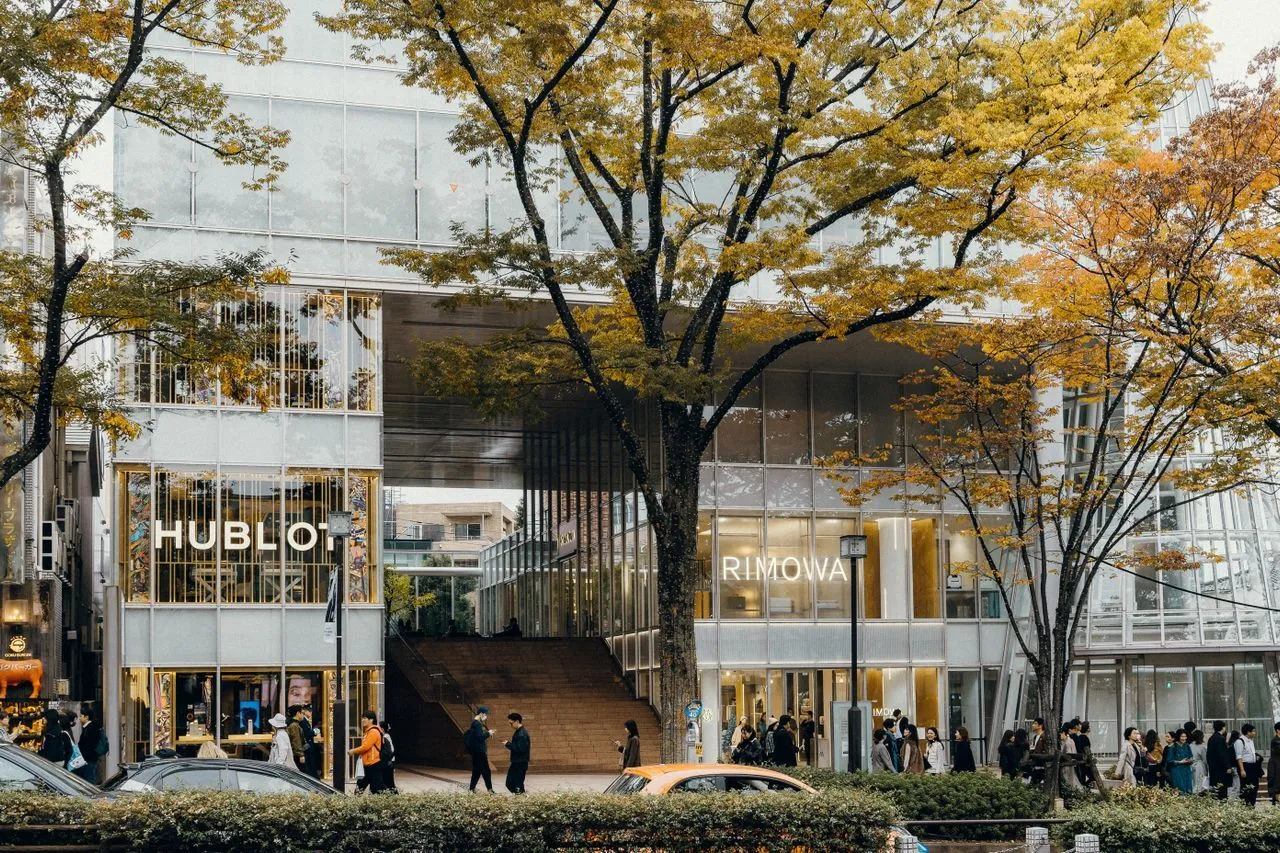
3. Luxury brand stores’ show windows and displays
In areas like Ginza and Omotesando, stores of world-famous brands line the streets, featuring distinctive and beautiful show windows and displays.
Seasonal or event-based displays are tempting to photograph, but there are points to note when shooting and publishing them.
Show-window decorations may incorporate original designs by designers, artworks, or characters. Such creative expressions may be protected by intellectual property rights such as copyright.
Different considerations apply when they are captured incidentally in the background of a streetscape versus when the display itself is the main subject of your photos or publications.
In particular, it’s wise to confirm in advance in cases like the following:
- Photographing the entire display or decorative works as the main subject
- Using the photos for advertisements or commercial content
- Focusing on and publishing brand logos or products
- Shooting with large equipment or filming video
Even for personal commemorative photos, stores may have their own photography rules. If there is a sign prohibiting photography, comply with it; if you’re unsure, check with store staff.
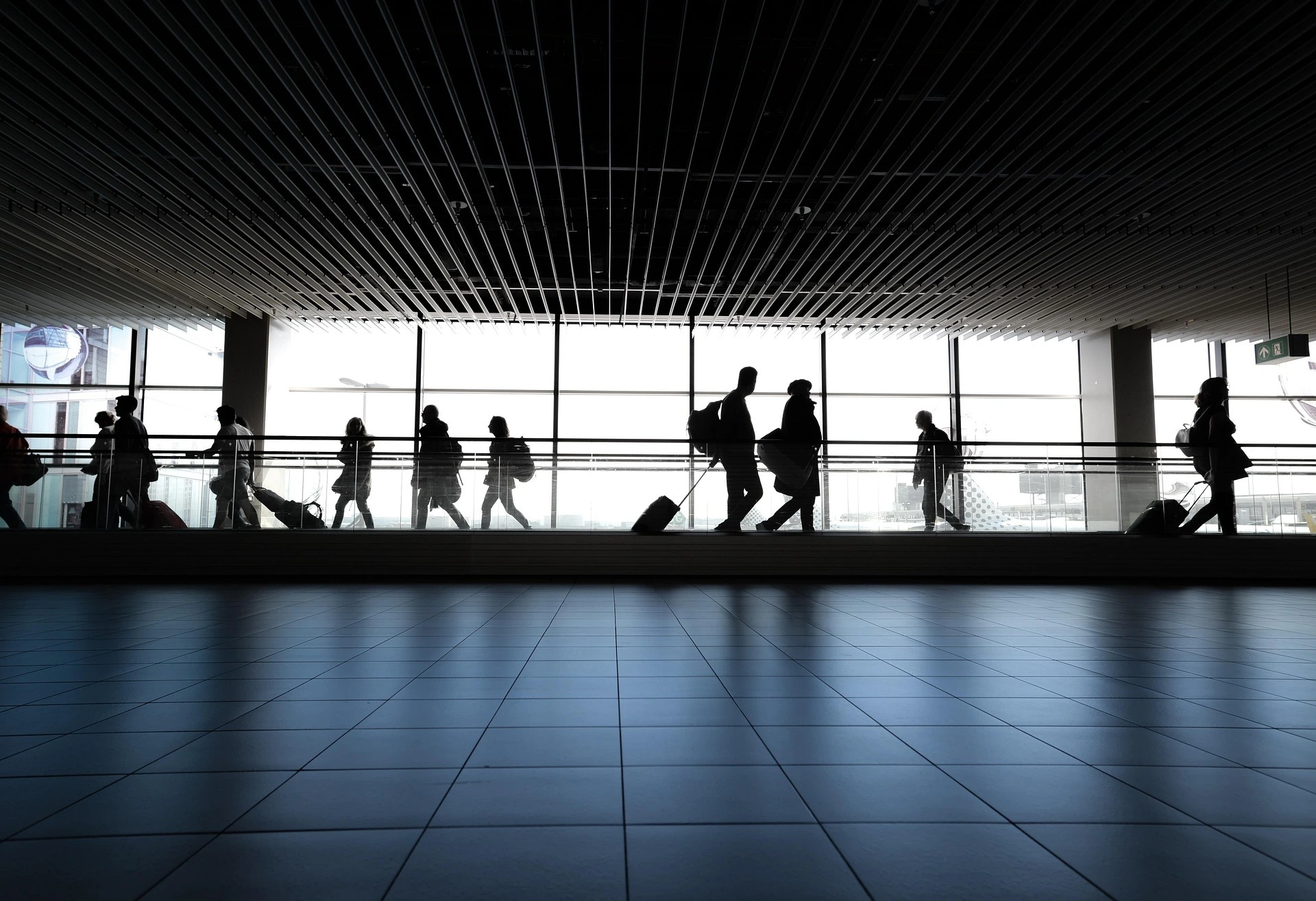
4. Airport security checkpoints and staff-only areas
Airports make you want to capture travel memories, but you can’t freely take photos in every area.
For example, at Narita International Airport, photographing security checkpoints, security equipment, and screening officers is prohibited. You also may not photograph areas managed by the government, such as immigration control and customs.
Rules for shops, lounges, and check-in counters inside the airport may vary depending on the operator in charge.
- Do not photograph security checkpoints or screening equipment
- Do not photograph areas related to immigration control, customs, etc.
- Do not photograph airport staff or other users without permission.
- Check the rules of each facility when in shops and lounges.
At airports, safety management takes priority, so check signs and staff instructions before shooting.
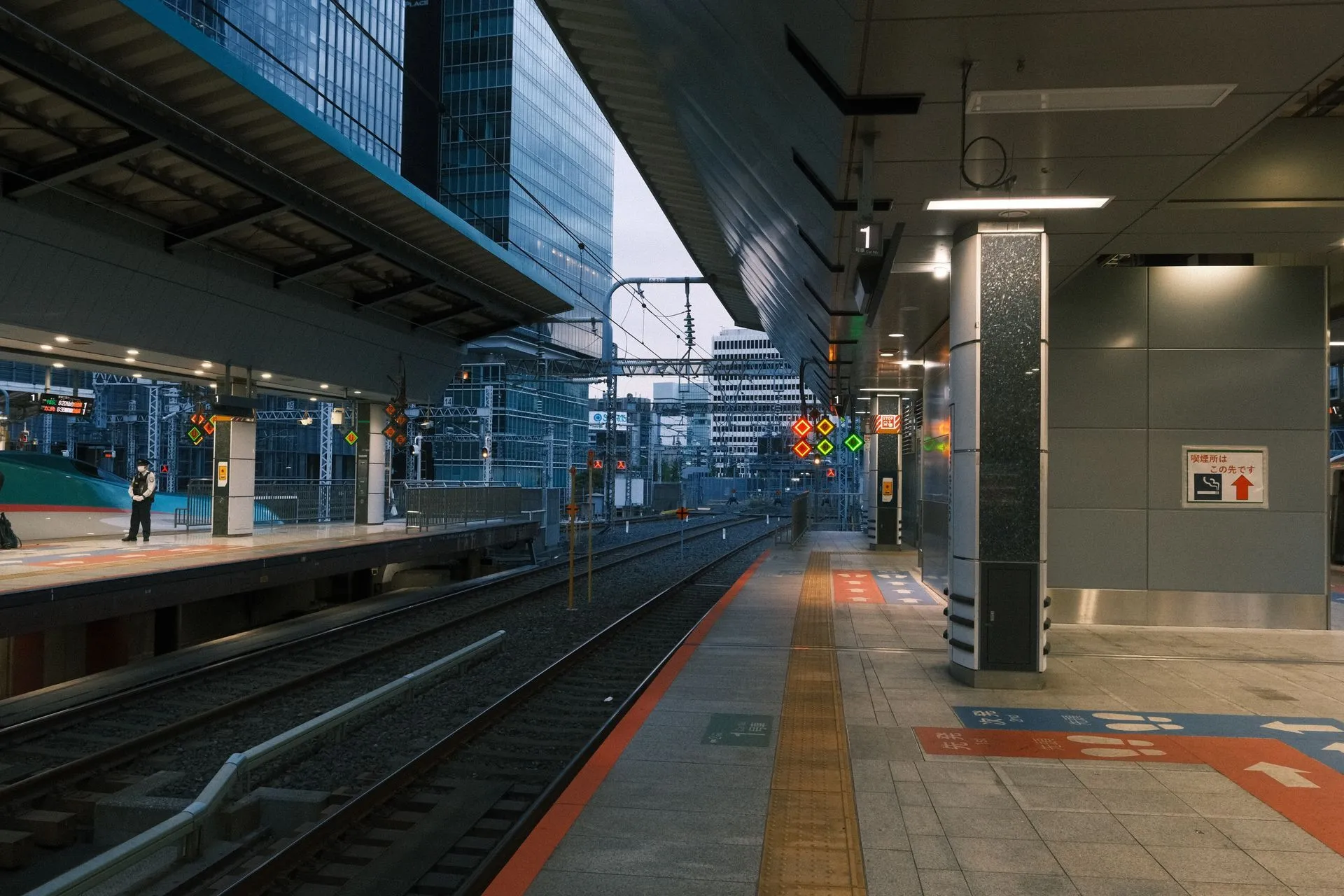
5. Station platforms and railway facilities
Tokyo’s stations and trains are appealing subjects not only for rail fans but also for many tourists. However, photographing on platforms or near tracks requires particular caution for safety reasons.
JR East prohibits or restricts actions such as leaning out over platform screen doors or tactile paving, standing on tactile paving, and using tripods or stepladders on platforms.
- Do not enter the tracks or restricted areas.
- Do not lean out from the edge of the platform.
- Do not stop on tactile paving.
- Do not use tripods or stepladders.
- Do not affect train operations with flash or lighting.
- Do not obstruct the passage of station staff or passengers.
When photographing railways, check the guidance from the station or railway company and shoot from a safe location.
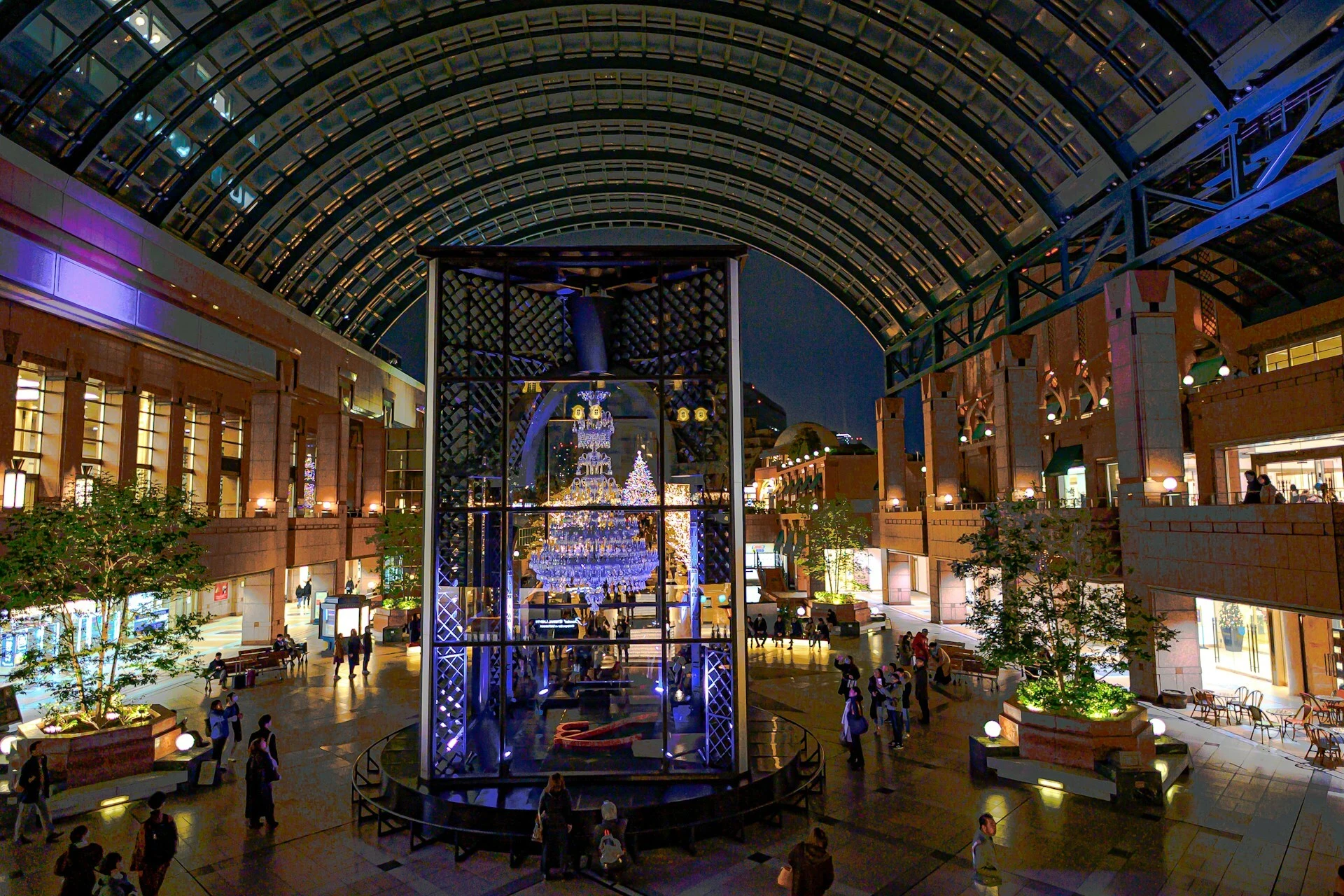
6. Inside commercial facilities, department stores, and shops
Even when personal commemorative photography is permitted at shopping malls, department stores, or brand shops, there may be facility-specific photography rules.
For example, some facilities restrict photography that captures other customers or staff, live streaming, shoots using large equipment, or photography for commercial purposes.
- Ensure that the faces of other customers and staff do not appear
- Do not photograph staff-only areas such as the cash register and the back room
- Check the store’s rules before photographing products or exhibits
- Obtain prior permission for live streaming or commercial filming
- Follow no-photography signs and staff instructions
If you want to take photos inside, it’s reassuring to check the rules on the store’s or facility’s official website in advance.
03Tips when photographing people|Respect portrait rights and privacy
When sightseeing in Tokyo, you may encounter moments you’ll want to capture, such as people walking the streets, tourists in kimono, or festival participants.
However, when photographing people, it is essential to consider their feelings and privacy.
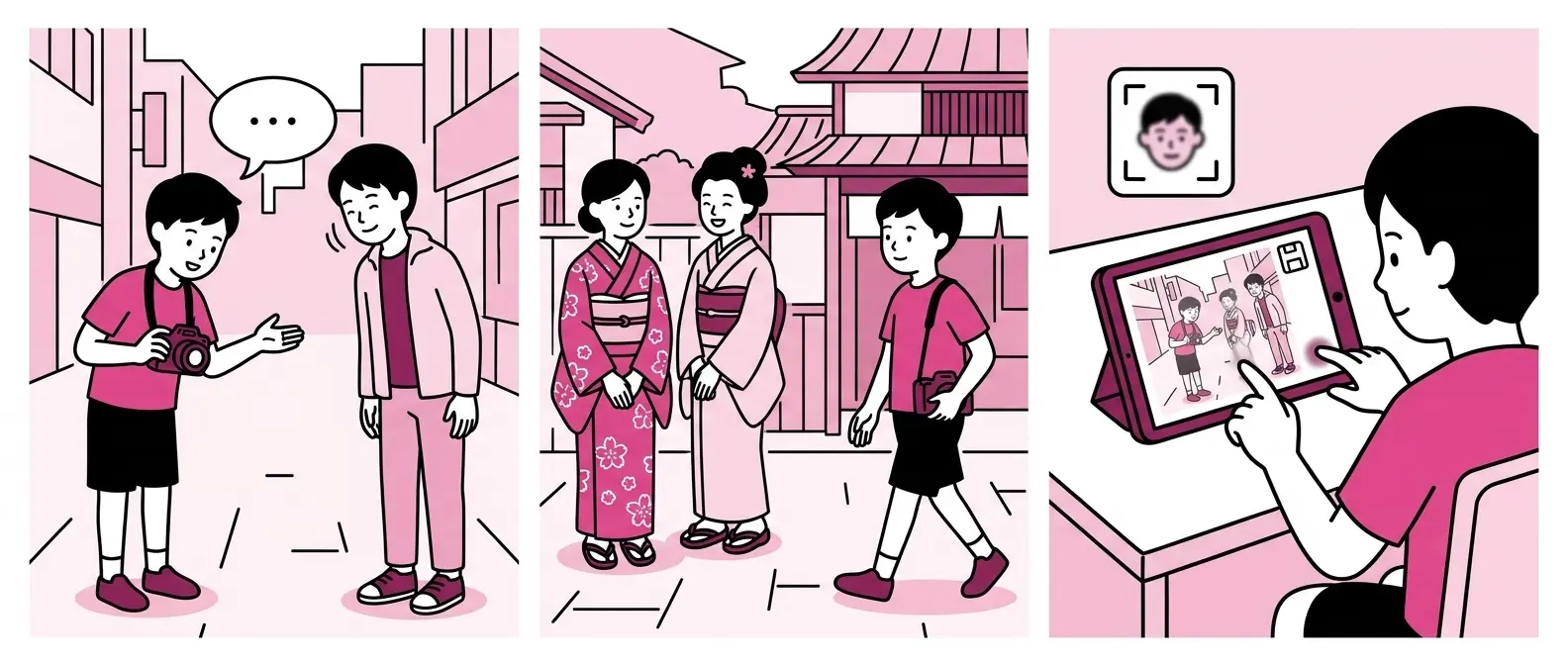
Get permission when photographing strangers
If you photograph strangers in the city or at tourist spots, try to obtain their permission in advance whenever possible.
In particular, if you want to make a specific person the main subject or take photos in which their face is clearly identifiable, it’s important to confirm before shooting.
Even if you don’t understand Japanese, you can communicate with simple phrases like the following.
- “May I take a photo?”(May I take a photo?)
- “May I take a picture with you?”(May I take a picture with you?)
If the person refuses or seems uncomfortable, do not force the shoot.
Do not photograph people in kimono or geisha without permission
In tourist areas such as Asakusa and Ueno, you may see people wearing kimono. In traditional destinations like Kyoto, you may also encounter geisha or maiko.
You may want to capture them as quintessentially Japanese scenes, but people wearing kimono are not necessarily tourists. Some may be working or spending private time.
Avoid taking close-up shots of someone’s face without permission, following them to photograph, or blocking their path. If you want to photograph a person, always check with them and respect their wishes.
What if other people appear in your photo?
At tourist sites or event venues, other people may unintentionally end up in your photos.
The points to consider differ between photos that capture an entire scene with passersby appearing small and those in which a specific person's face or figure is clearly recognizable.
Especially when posting to places where an unspecified large number of people can view them, such as social media or blogs, consider the following methods.
- Adjust the composition so that people are not included
- Crop the image so faces are not identifiable
- Blur faces or cover them with stickers as needed
- For photos where a specific person is the main subject, obtain their permission to publish
It's important not only to take photos but also to think about how those photos will be used.
043 things to keep in mind when posting photos on social media
Many people share travel photos on social media such as Instagram, X, and TikTok. When posting the photos you have taken, you also need to be mindful of information about the people and places shown.
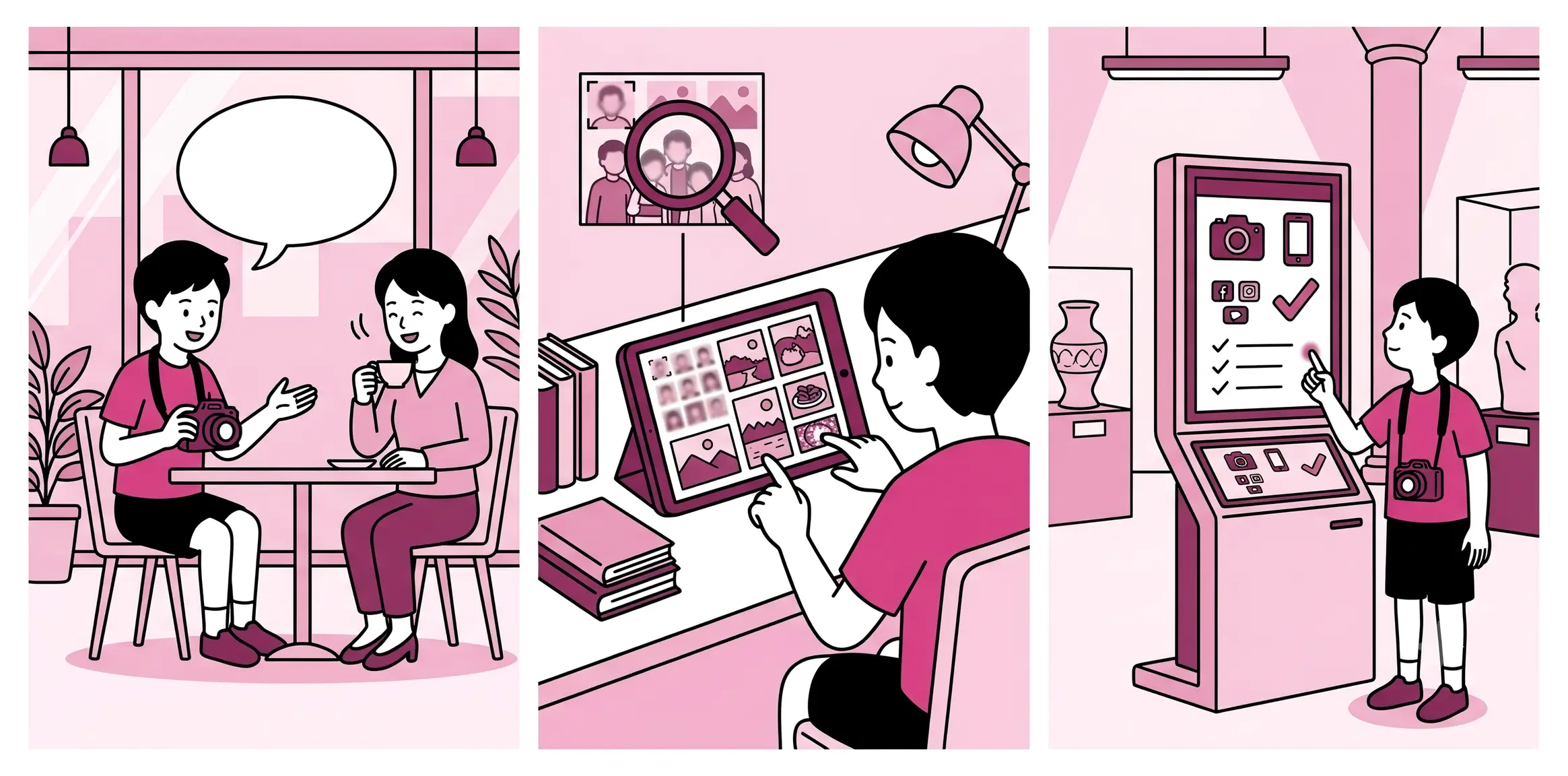
1. Get permission from people in the photo to post on social media
Even if you have permission to take the photo, that doesn't necessarily mean you have permission to post it on social media.
Taking photos and publishing them on the internet are separate matters. Even when photographing friends, family, or people you meet while traveling, confirm whether it’s okay to post before making it public.
In particular, photos in which children's or other people's faces are clearly visible should be handled with care.
2. Check for embedded location data and personal information
Photos may contain information that can identify the shooting location.
For example, pay attention to the following information.
- GPS location data recorded in the photo
- Hotel room numbers or reservation details
- Names and QR codes displayed on tickets or booking screens
- Buildings or surrounding scenery that reveal your home or accommodation
- License plates or personal contact information
Before posting, review the entire photo, and if unnecessary information is captured, crop or edit it. Also be cautious about sharing your accommodation or current location in real time.
3. Check the social media posting rules of facilities and events
Some facilities may allow photography but have separate rules regarding posting on social media or commercial use.
For example, museum exhibits, event stages, and store products may have different conditions for photography and for publication/use.
If you want to post photos taken during your trip on social media or a blog, check the facility’s official website, terms of use, and on-site guidance. For shooting/posting intended for advertising or monetization, the rules may differ from personal commemorative photography, so it’s best to contact the administrator in advance.
05Photography etiquette to keep in mind at Tokyo’s tourist spots
In Tokyo, photography rules vary by location. Here are key points to note for typical sightseeing situations.
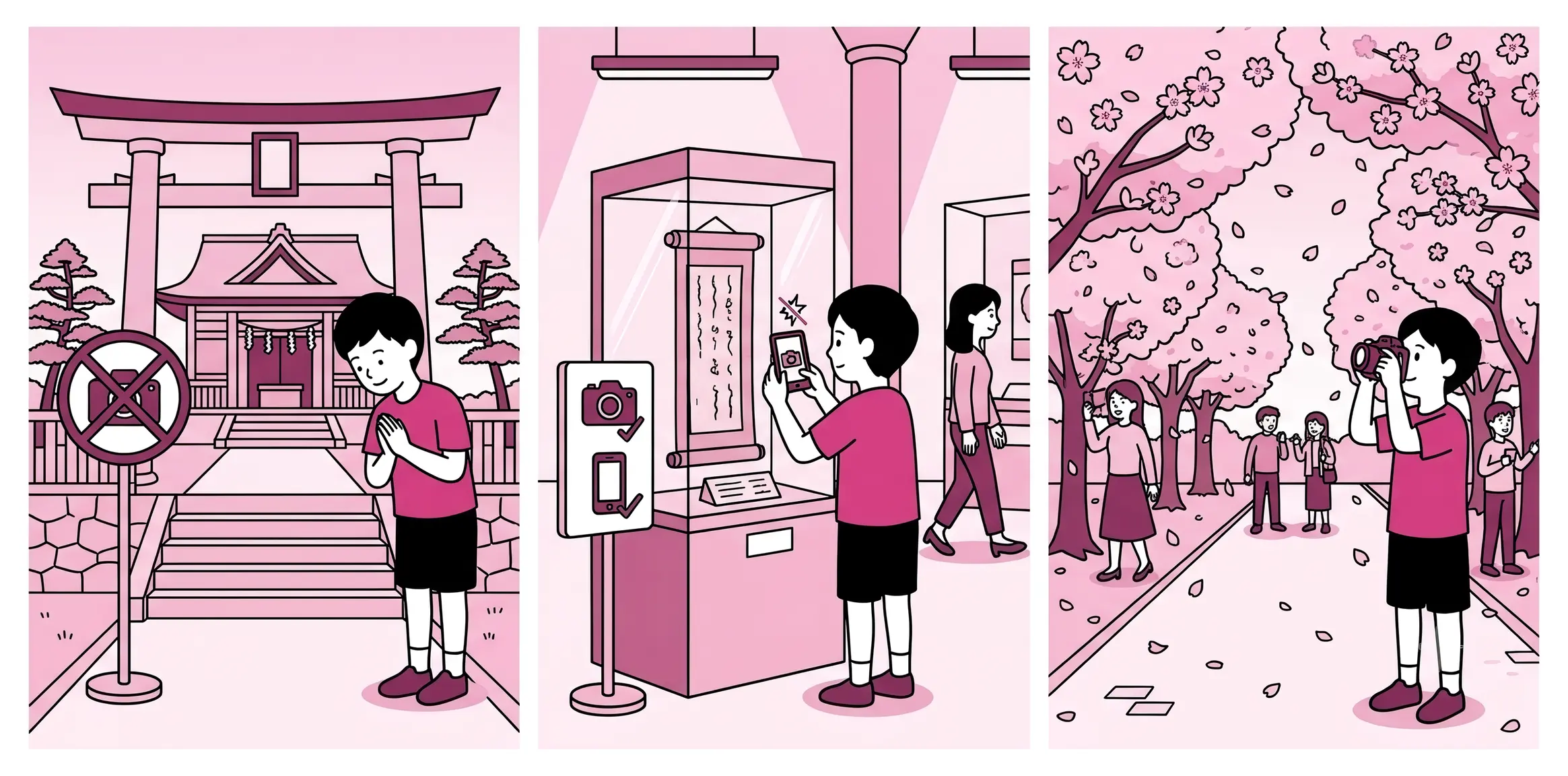
Photography at shrines and temples
Shrines and temples are not only tourist attractions but also important places for worshippers.
You cannot freely take photos everywhere within the precincts. The main hall, sacred objects, Buddhist statues, and scenes during prayers may be off-limits to photography.
- Follow no-photography signs and guidance
- Shoot where you won’t obstruct worshippers
- Do not photograph people praying or during rituals without permission
- Do not enter inside fences or ropes
- Respect the quiet atmosphere and avoid speaking loudly
Photography in art museums and museums
At art museums and museums, photography rules differ by exhibit and special exhibition.
Sometimes only certain works may be photographed, and photos may be allowed while videos and flash are prohibited.
- Check the photography guidance for each gallery/room
- Follow the conditions for using flash and tripods
- Do not touch the works or display cases
- Do not obstruct other visitors’ viewing
- Also confirm the conditions for SNS posts and commercial use
Seasonal spots such as cherry blossoms, autumn leaves, and illuminations
Places where you can enjoy seasonal flowers or night views attract many people for photography.
Especially during cherry blossom and autumn foliage seasons, it gets crowded, so take photos while yielding to those around you.
- Do not pull or break flowers or branches
- Do not enter plant beds or lawns without permission
- Do not block pathways with tripods or selfie sticks
- Do not occupy the same spot for a long time
- Do not step onto the roadway or crosswalk to take photos
06Simple Japanese phrases you can use when taking photos
Here are some Japanese phrases you can use when you want to photograph people in Japan or confirm photography rules with facility staff.
| Japanese | English |
|---|---|
|
写真を撮ってもいいですか? Shashin o totte mo ii desu ka? |
May I take a photo? |
|
一緒に写真を撮ってもいいですか? Issho ni shashin o totte mo ii desu ka? |
May I take a picture with you? |
|
ここは撮影できますか? Koko wa satsuei dekimasu ka? |
Is photography allowed here? |
|
フラッシュを使ってもいいですか? Furasshu o tsukatte mo ii desu ka? |
Can I use flash? |
|
SNSに投稿してもいいですか? Esu Enu Esu ni toukou shite mo ii desu ka? |
May I post this on social media? |
|
ありがとうございます。 Arigatou gozaimasu. |
Thank you. |
Even if you don’t speak Japanese, you can confirm things with simple English or gestures. Listen carefully to the other person’s response, and enjoy yourself only after obtaining permission for photography and posting.
07Frequently Asked Questions (Q&A) about Photography While Sightseeing in Tokyo
Q. Can I freely take photos in the streets of Tokyo?
A. Many places allow you to photograph general streetscapes and scenery, but that doesn’t mean you can shoot freely everywhere. On private property, within facility grounds, or in no-photography areas, follow the rules set by the management. Also be mindful of passersby’s privacy and the safety of those around you.
Q. Is it okay to take photos in Kabukicho and Golden Gai?
A. Rules vary by area and by shooting method. In Kabukicho’s entertainment district, photographing touts, shop staff, or passersby without permission may lead to trouble, so exercise great caution. In Shinjuku Golden Gai, it is announced that permission is required for street photography within the area. Please check official information before your visit.
Q. What should I do if strangers appear in my photos at tourist spots?
A. When publishing photos, make sure that people's faces or information that can identify individuals are not visible. Apply cropping or blurring as needed, and if a particular person is the main subject of the photo, we recommend obtaining their permission before posting.
Q. Is it okay to post photos I took on Instagram or TikTok?
A. In principle, post only after considering the rules of the shooting location and the privacy of people who appear in the photos. However, some facilities or events may restrict posting on social media. Being allowed to take photos does not always mean you may publish them on social networks, so it is important to check in advance.
Q. Can I use a tripod or a selfie stick anywhere?
A. No. In art museums, museums, shrines and temples, train stations, and crowded tourist spots, their use may be prohibited or restricted. Because there is a risk of bumping into people around you or obstructing passage, check the facility's rules before using them.
Q. What should I do if I want to shoot for commercial use or film videos?
A. Unlike personal commemorative photography, shoots for advertising, work, or monetization may require applying to the facility and obtaining prior permission. There may also be specific rules for video recording and live streaming, so check the facility's official website or contact the manager before shooting.
08Summary
Enjoy sightseeing in Tokyo while following photography etiquette!
When sightseeing in Tokyo, being considerate of the people around you and the facilities is important for enjoying photography and posting on social media. Make a habit of checking areas where photography is prohibited, obtaining permission when photographing people, avoiding obstructing passage, and reviewing for personal information before posting.
Also pay attention to location-specific rules, such as in Kabukicho, Golden Gai, and brand shops.
By observing basic photography etiquette, pleasantly capture Tokyo's beautiful scenery and your travel memories in photos!